Double Easel Cards ⭐ Card Making Countdown 2026
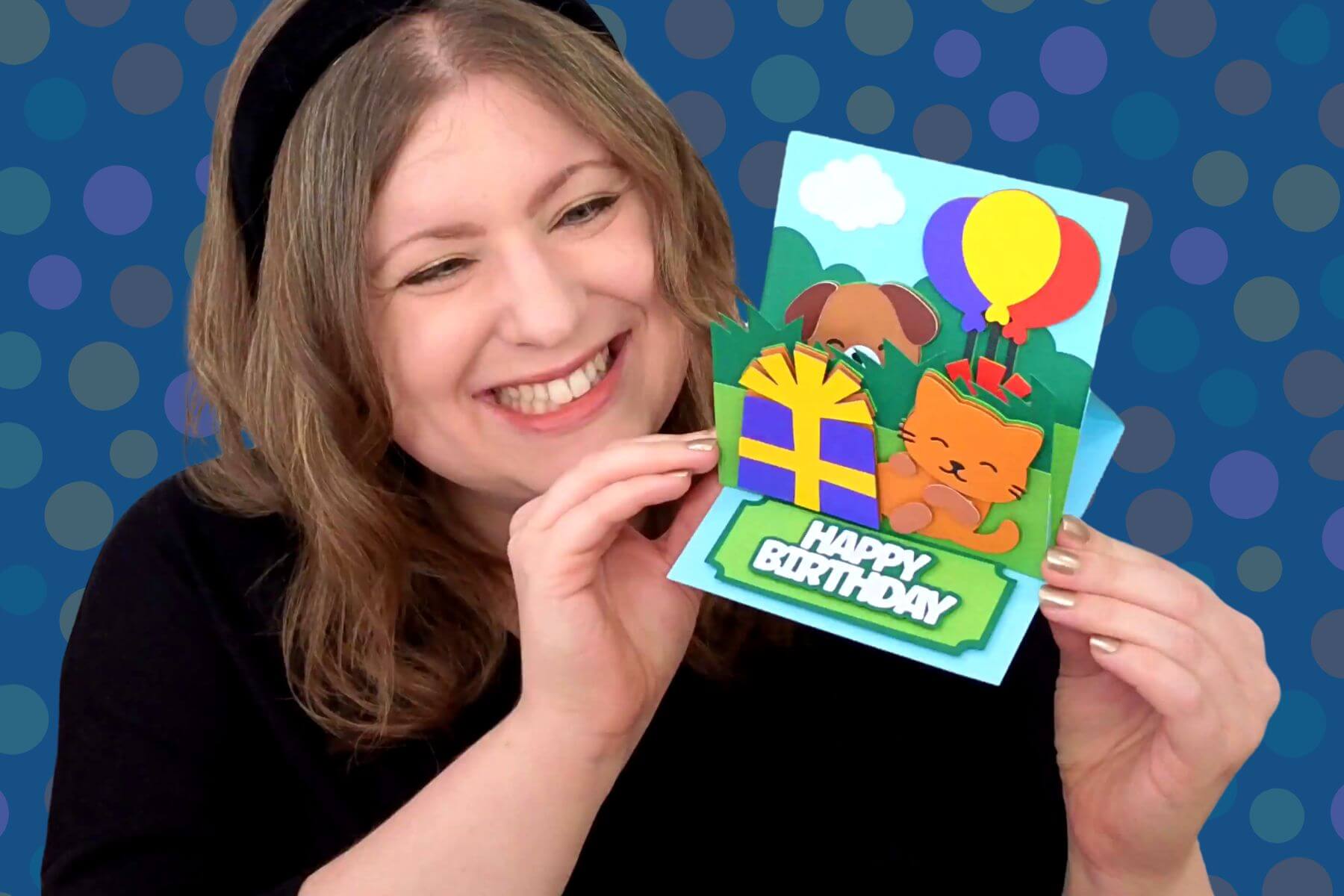
Make impressive double folded easel cards that fold flat for posting.
Welcome to Day 13 of the 2026 Card Making Countdown.
Today we are making double easel cards.
A couple of years ago in the 2024 Card Making Countdown, we created these single easel cards. And they were a big hit!
It’s been so nice over the last couple of years seeing all of the projects that you’ve created using these templates.
So, I thought this year, why not bring back an old favorite, but with a new twist… DOUBLE easel cards!
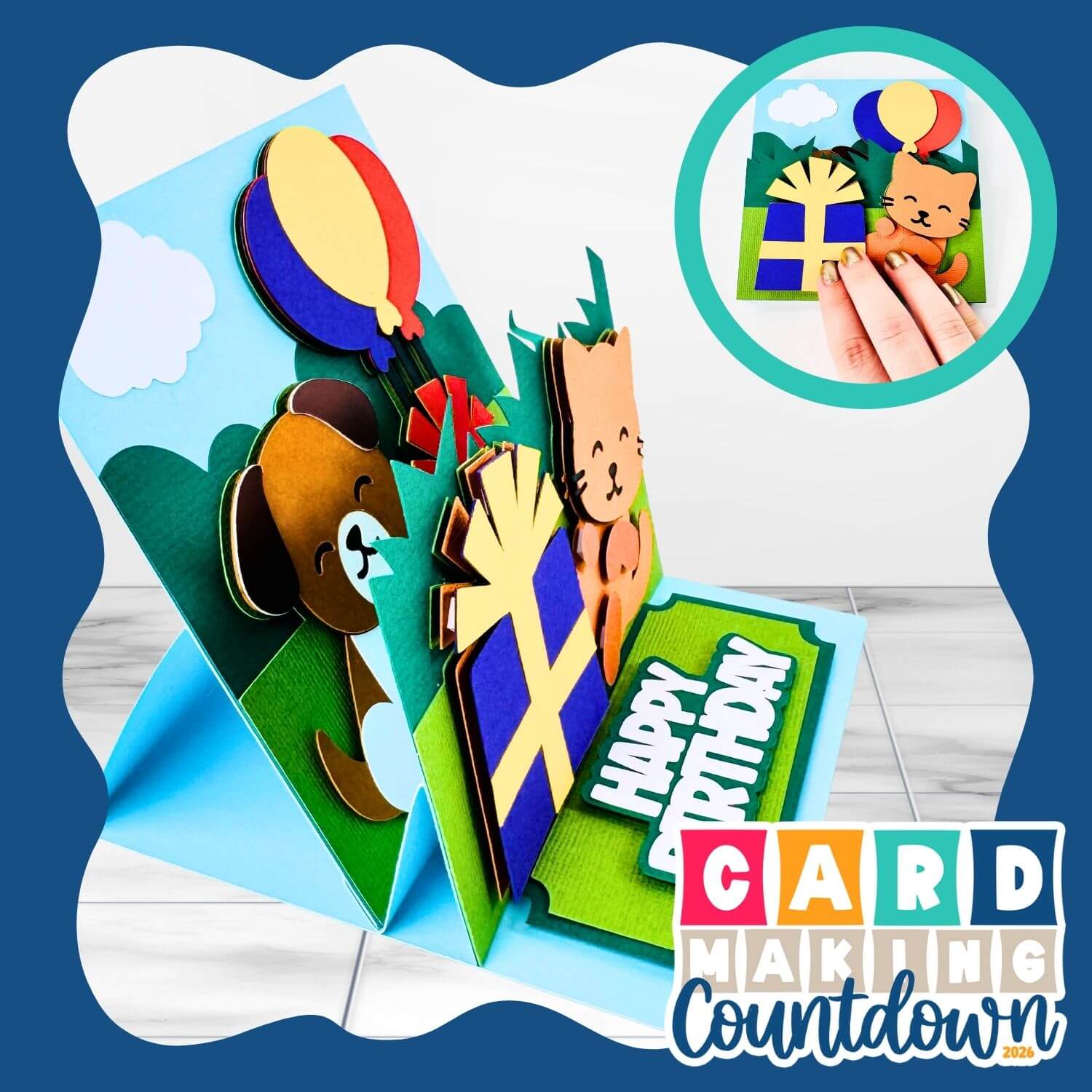
These cards have two layers to the easel technique, so you can include even more pretty pictures on the front of your cards.
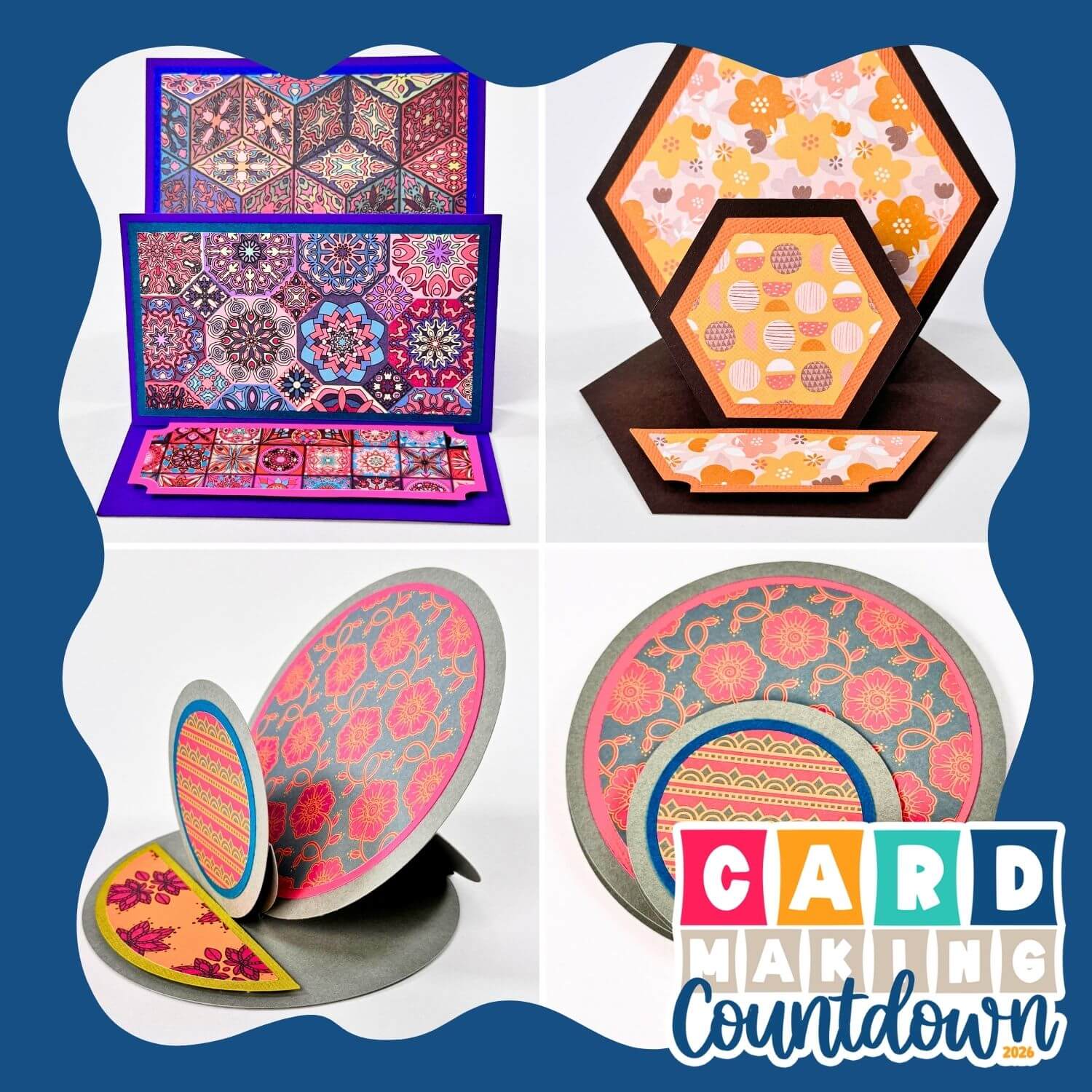
There are three templates included for you to add your own images, pictures, embellishments and toppers to.
There’s a square double easel card, a circular double easel card, and a hexagon double easel card.
But I didn’t just want to leave you with only the templates, so today’s download also includes a predesigned card with a puppy and kitten theme, to give you ideas on how to decorate the cards.
This project is part of the 2026 Card Making Countdown
Double easel cards supply list
Here is a list of the materials that are used to make this project.
Please note that some of the links included in this article are affiliate links, which means that if you click through and make a purchase I may receive a commission (at no additional cost to you). You can read my full disclosure at the bottom of the page.
- Cricut machine
- Light blue Cricut cutting mat
- Cricut scoring wheel or scoring stylus
- Coloured card (thick, solid core cardstock works best for the base card pieces)
- Patterned paper
- Glue (I like Bearly Art Glue and Collall)
- Foam squares
- Decorations/embellishments/toppers
This project is suitable for the following types of Cricut machines: Explore series, Maker series, Joy Xtra, Joy and Joy 2. You will need to make the templates smaller to cut with a Joy or Joy 2.
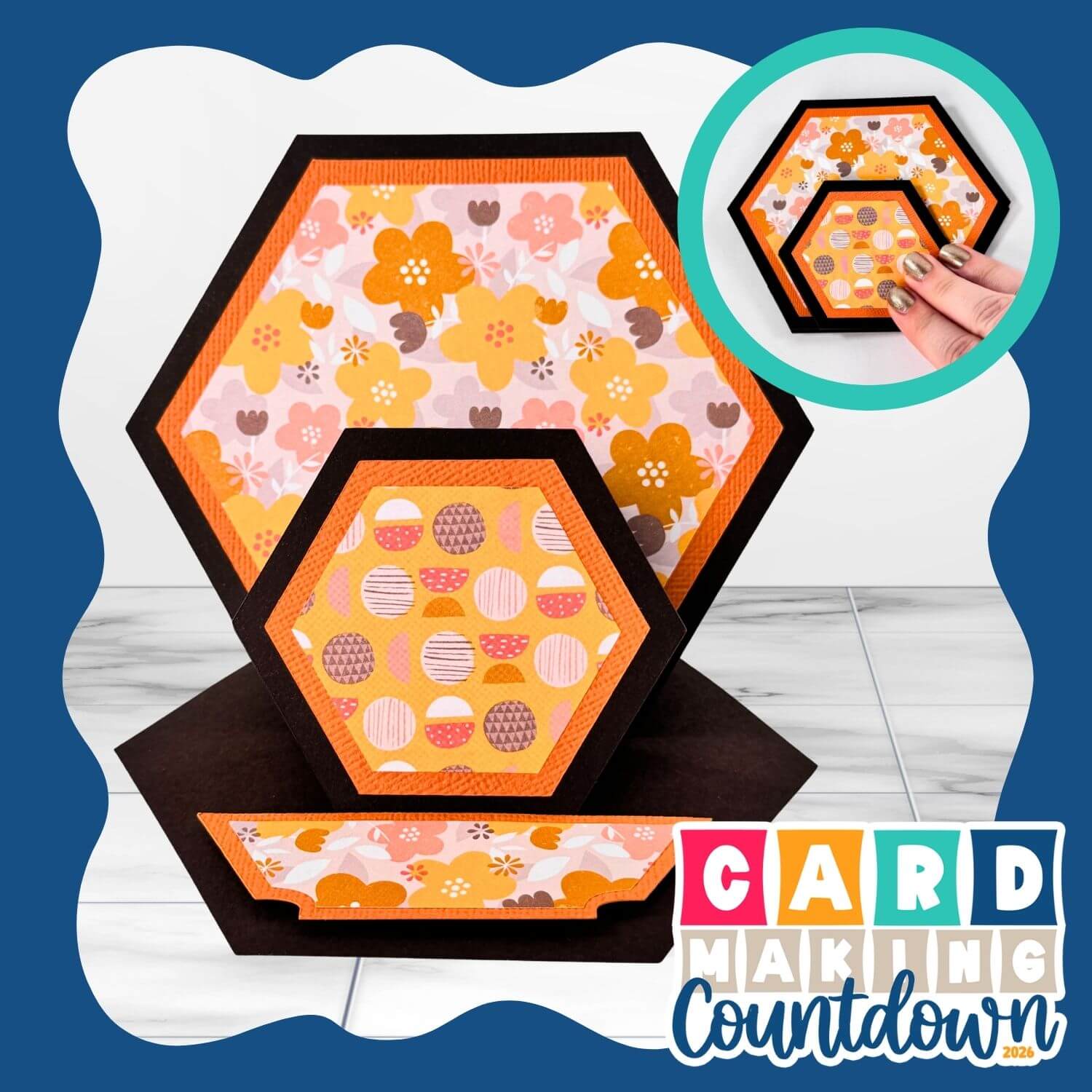
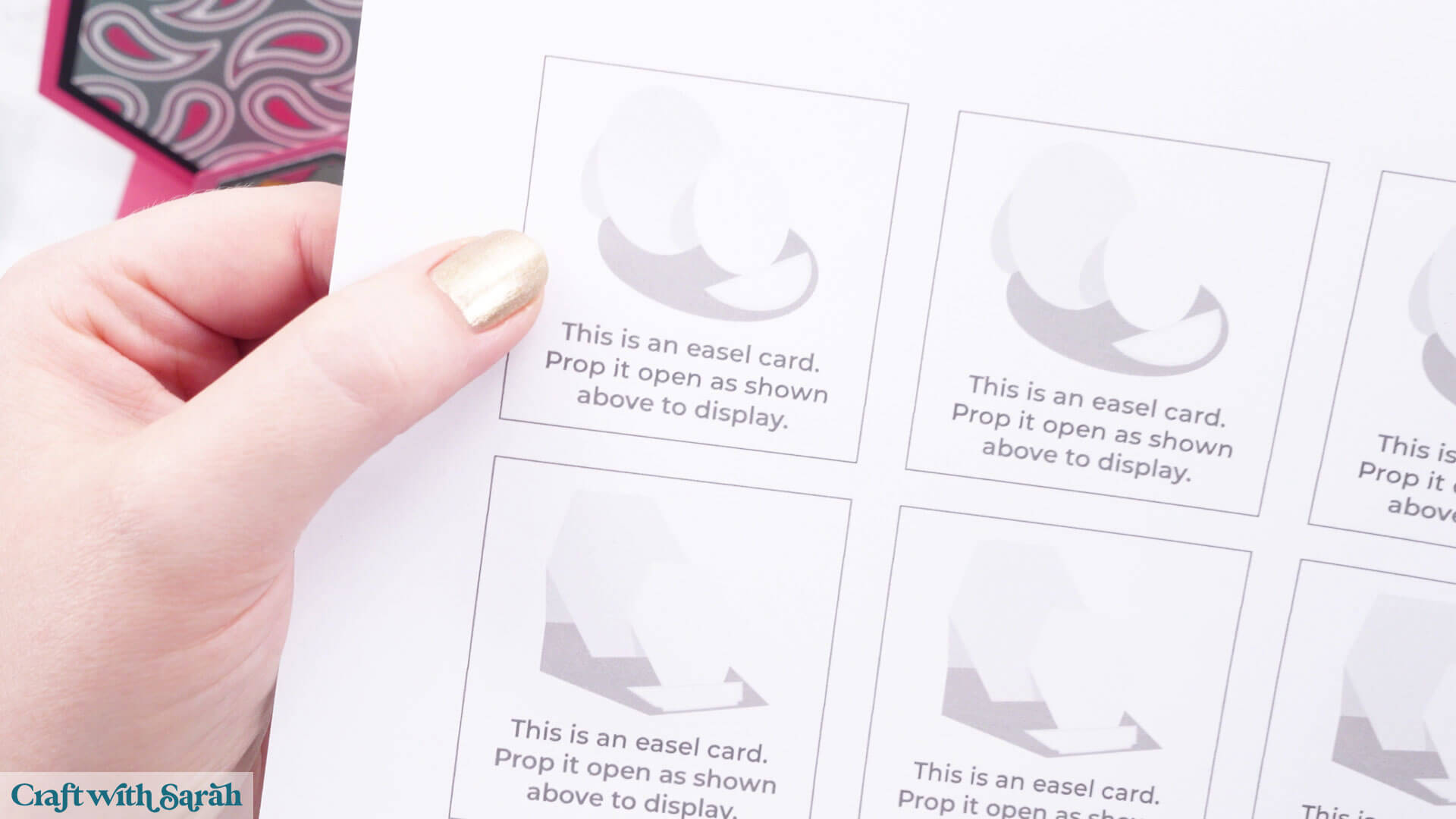
The download comes with a printable sheet of instruction guides that you can cut and put inside the envelopes with your cards, to show the recipient how to display them.
Foundation learning
If you're new to making papercrafts with your cutting machine, check out these links to get you started.
They include videos on topics such as: which file to use with your type of cutting machine, how to load the files into your cutting machine's software, how to cut cardstock with your type of cutting machine, how to recolor and modify/customize the cut files and tips for displaying your projects.
- How to use zip folder downloads
- Help guides for Cricut machines
- Help guides for Silhouette machines
- Help guides for ScanNCut machines
The following tutorials are Cricut-specific, but many of the ideas will work similarly with a Silhouette or ScanNCut machine and any cut files that are shared in them are compatible with all types of cutting machine.
- How to score with a Cricut (even without scoring tools)
- Print then cut tutorial
- Design Space tools (Combine, Attach, Slice, Weld, Flatten, etc.)
- Pattern fill tutorial (for making backgrounds & cutting images to a specific shape/size)
- Free envelope SVGs that can be sized to fit any card
- Presentation boxes for handmade cards
- How to write inside cards with Cricut pens
- How to cut layered designs at a small size
- Design Space tips & tricks
- Cricut pens tutorial
- How to mount multiple designs in the same frame with magic guides
Double easel cards video tutorial
Watch the video below to see how to make this project. Keep scrolling for a written tutorial.
How to make double easel cards with a Cricut
The same steps shown below can be used for any of the double easel card templates, including the predesigned cat and dog card.
Step 1) Download the cutting files & upload to Design Space
Get the files using the box below.
Purchase the File(s)
This cut file is available as part of the Instant Access Bundle.
Or, purchase the designs individually:
Before you upload the SVGs to Design Space, you need to unzip the download folder that they come in.
Not sure how to do this? Click here for a tutorial that covers all the following types of computer and device:
- How to unzip a folder on a Windows computer
- How to unzip a folder on a Mac
- How to unzip a folder on an iPad
- How to unzip a folder on an iPhone
- How to unzip a folder on an Android device
After unzipping, upload the SVG file(s) into your cutting machine software.
Not sure how to use cut files with your type of machine? The following links lead to tutorials on how to use cut files in:
- Cricut Design Space
- Silhouette Studio
- CanvasWorkspace (for ScanNCut machines)
If you are using Cricut Design Space, start a new project and then click the “Upload” button on the left of the screen.
You can then either click “Browse” to find the file on your computer, or drag-and-drop it.
Choose one of the templates in the “SVG Files” subfolder.
Press “Upload” on the next screen.
After uploading, the design should be automatically inserted onto your Canvas.
To hide the left sidebar (to give you more space for designing!), click the arrow that’s about half way down the page.
If the design doesn’t get inserted onto your Canvas, it will show under “Uploads” in your “Recently Uploaded Images”. Click on it and then press “Add to Canvas” to put it onto your Project.
Need help uploading SVGs? Get step-by-step instructions here in our detailed help guides for Cricut, Silhouette and ScanNCut.
I am using the svg-double-easel-square-craftwithsarah.svg file for this tutorial.
Step 2) Check the template size
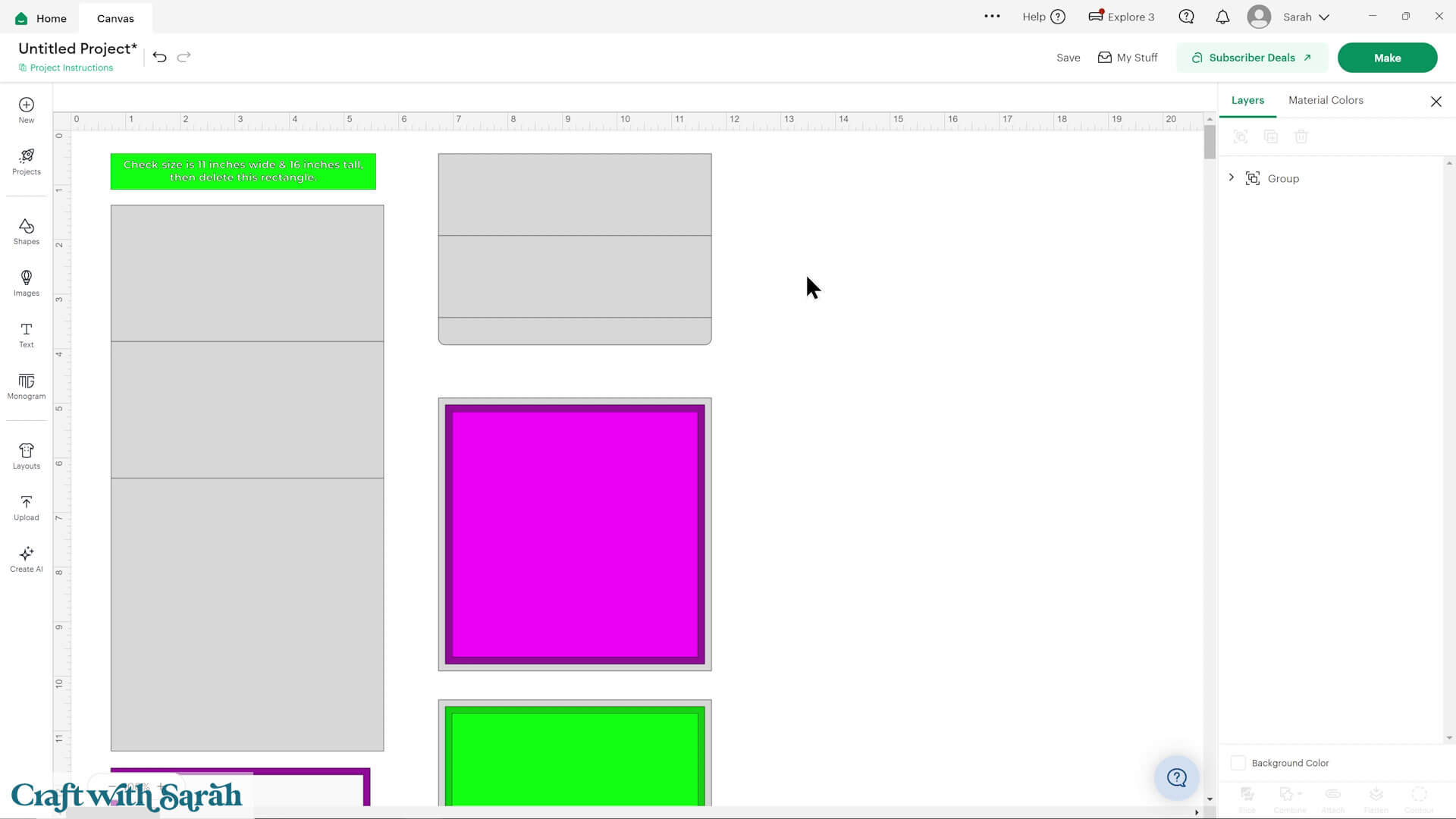
Check the size that shows in the lime green box on the top-left of the box card template.
Make sure your double easel card is showing at that exact size. If it isn’t, then change it to match.
Click the design and press the “Ungroup” button at the top of the layers panel.
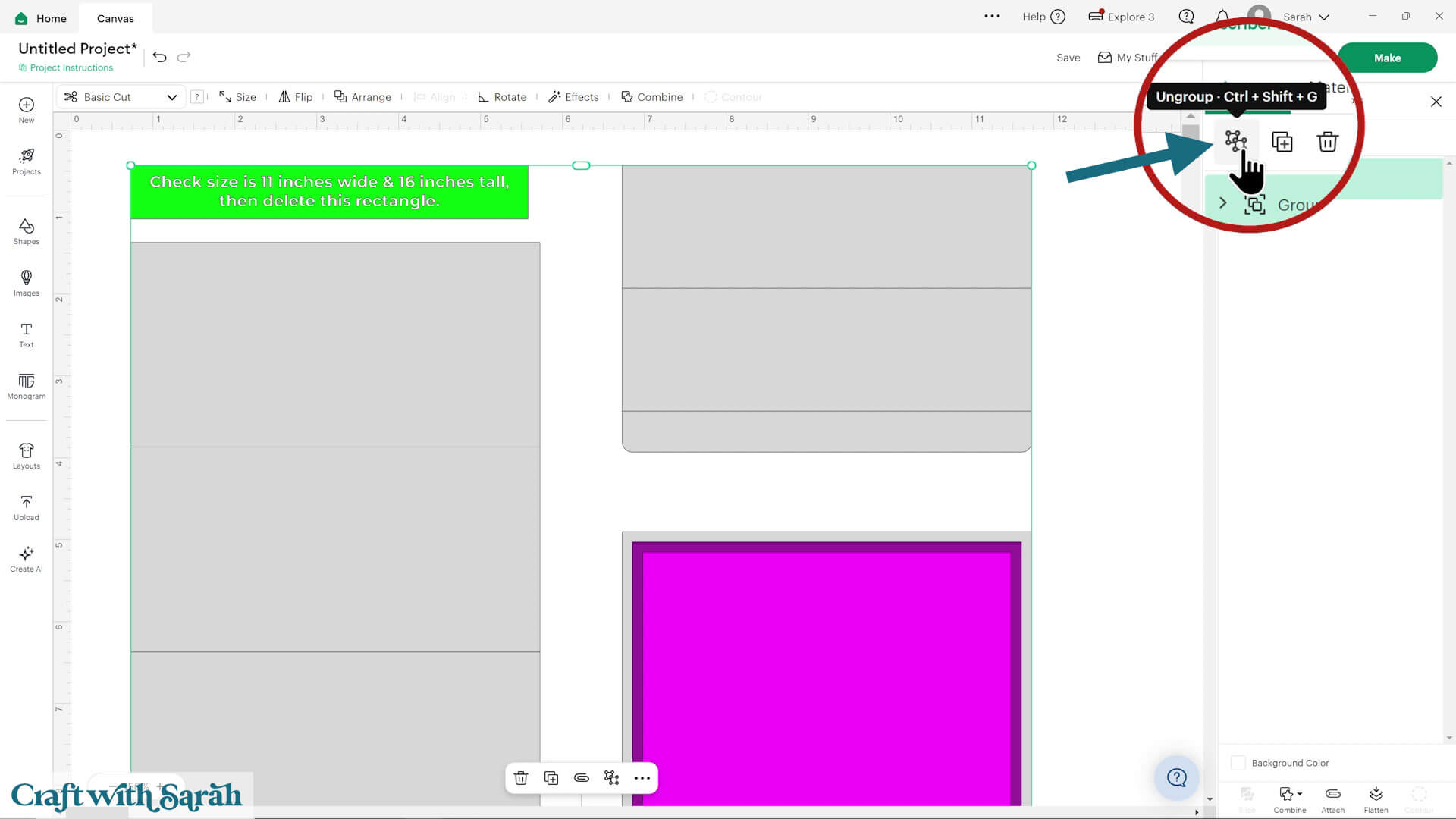
Click the green size guide box and delete it.
The different bright colours are to show the different parts of the decorations.
I made them in different colours in case you want to use different papers for each of them.
However, you can combine the colours if you prefer to use less papers.
Step 3) Format the score lines
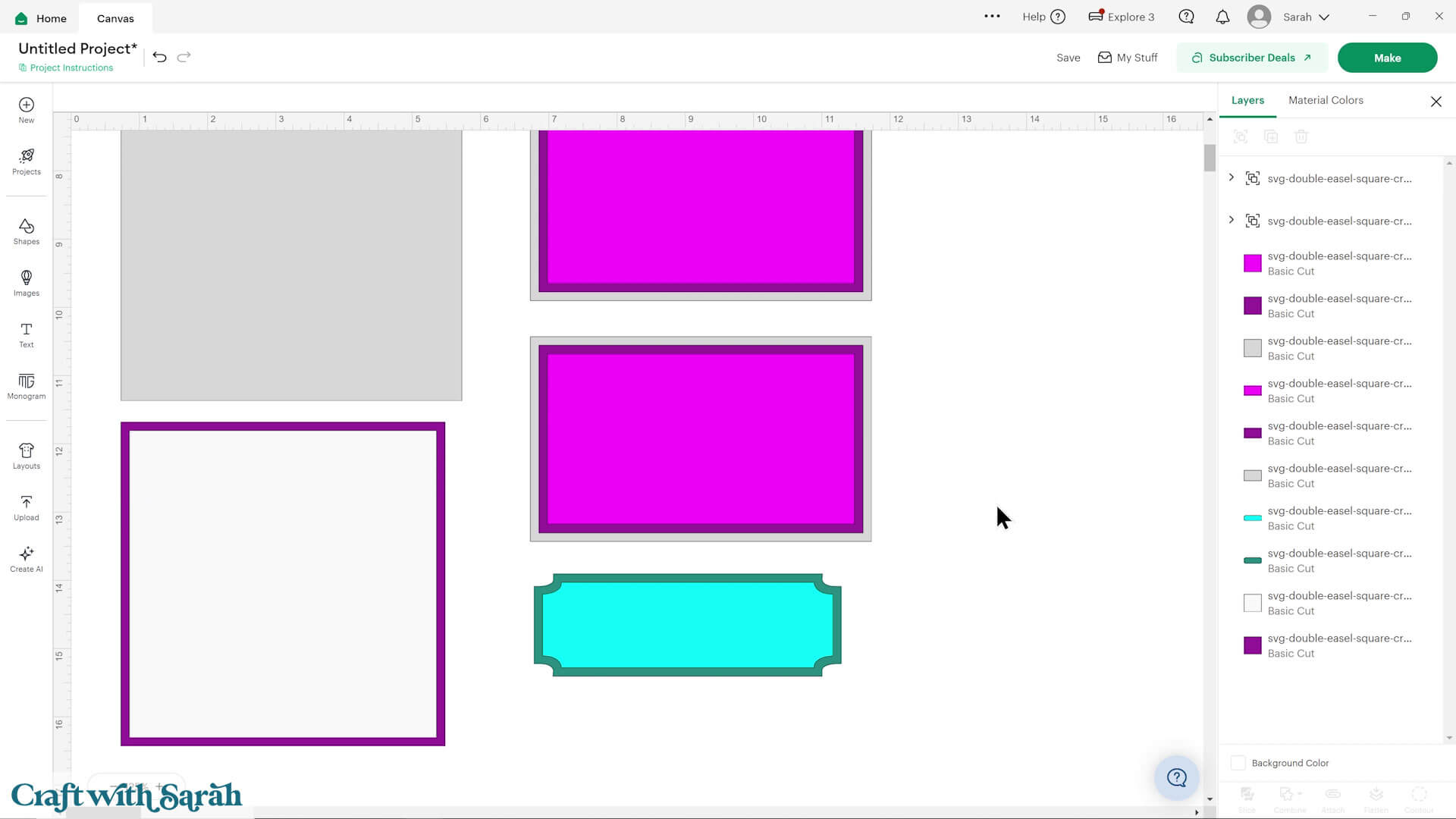
Click one of the base card pieces to select it, then click the chevron arrow that appears next to it in the layers panel to open it up.
Click the top layer within that group to select just that piece. It looks like two horizontal lines.
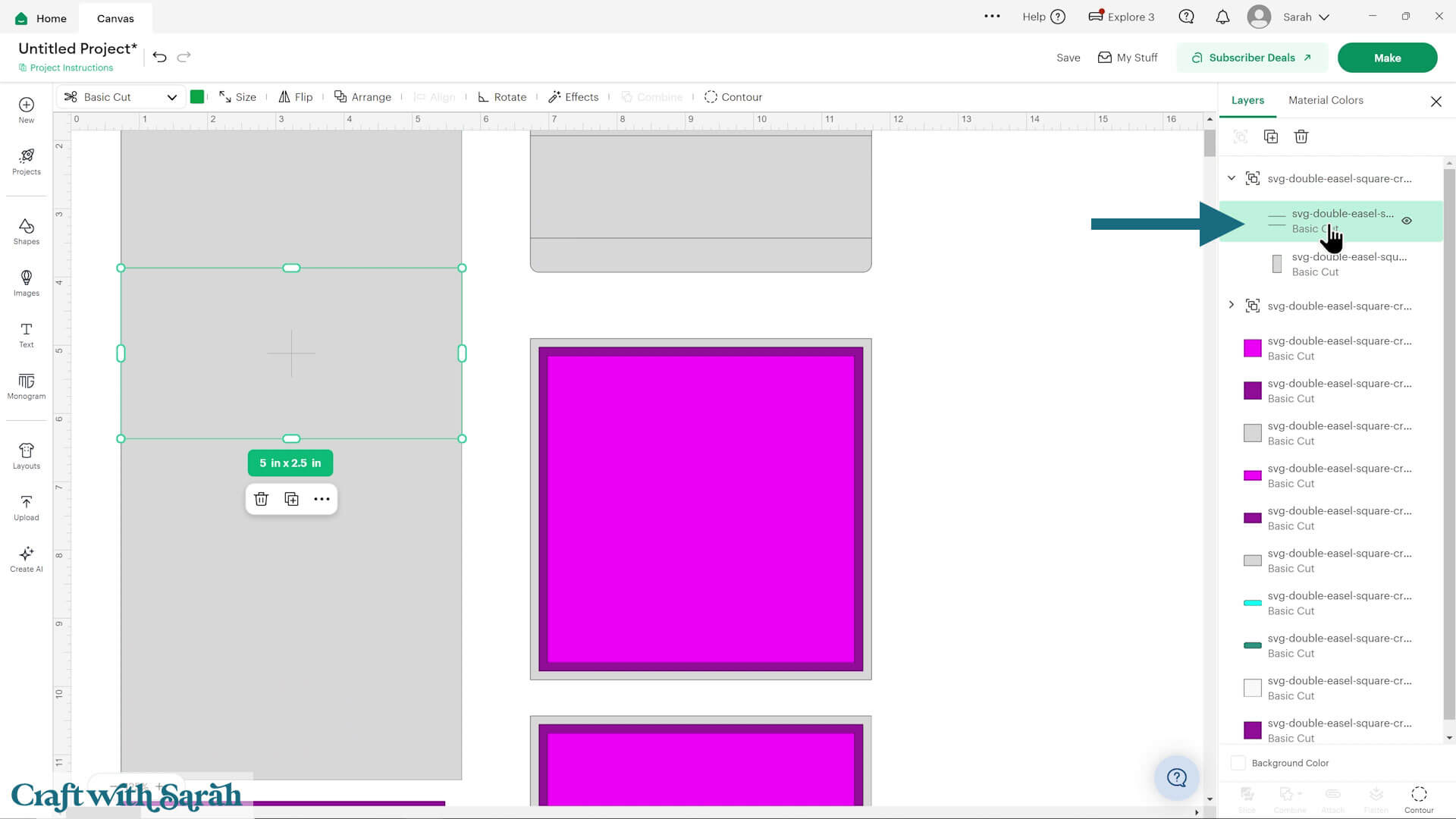
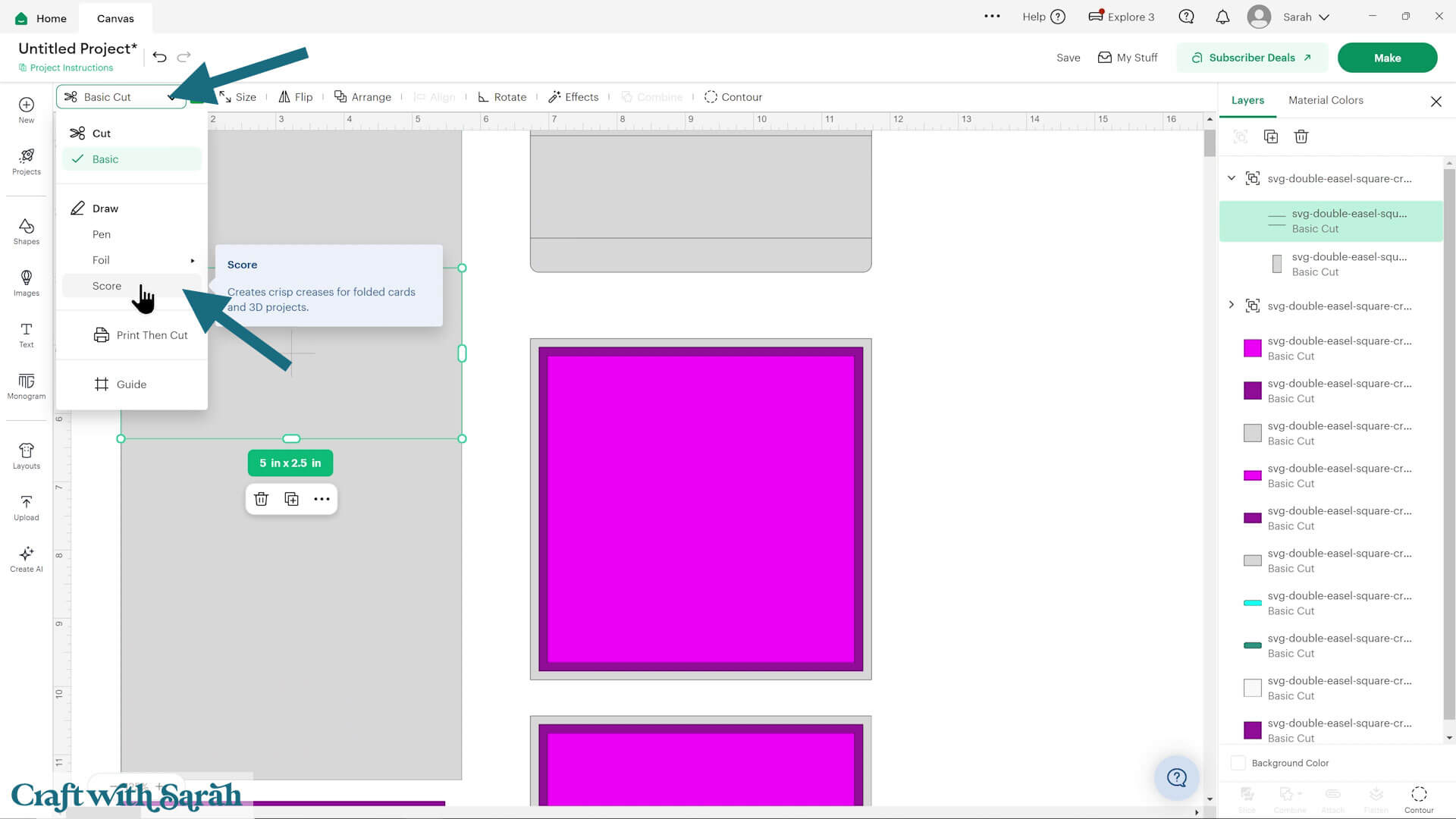
Change it to “Score” in the Operations dropdown.
Click to select the group of the score line and the base piece, and press “Attach” to join the score line to the base piece.
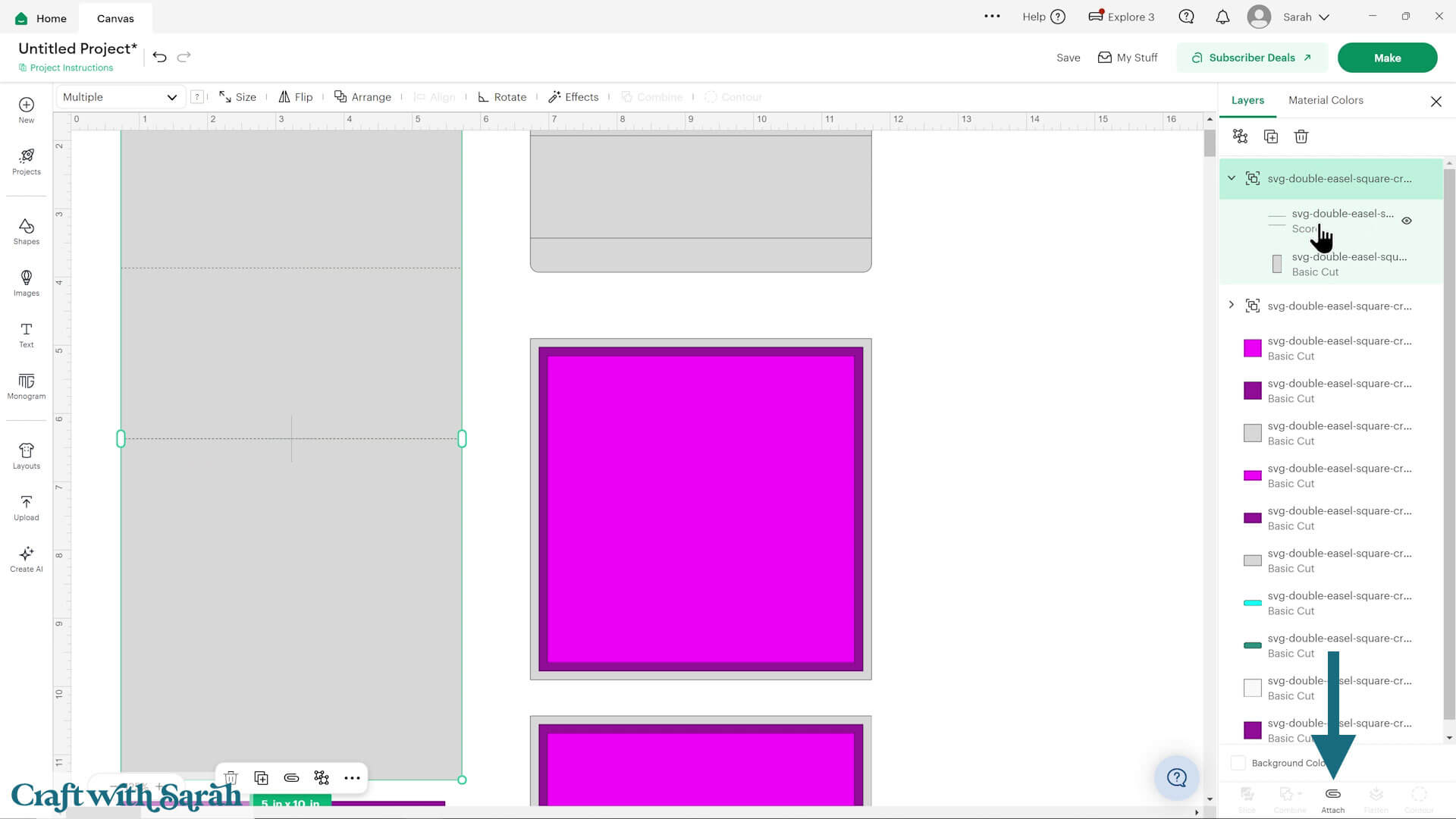
Repeat for the base card piece.
Step 4) Design your card
You can now add any other decorations or embellishments that you choose.
Alternatively, you could cut the project as-is and then decorate it afterwards using existing items from your craft stash.
Step 5) Cut out all the pieces
When you’re happy with how the project is looking in Design Space, click “Make” and follow the instructions on-screen to cut out all the pieces.
To change the paper size, go into the dropdowns over on the left side of the screen and choose the paper size that you want to use. You need to change it for every single colour.
To save space on your cardstock, you can move things around by clicking and dragging. Make sure when you’re moving things about that nothing overlaps because otherwise, it won’t cut out properly.
However, be careful NOT to rotate any patterned paper pieces, otherwise they will not cut with the pattern the correct way up when you put the card together.
I recommend strong, solid-core, double-sided coloured cardstock for the base pieces of the easel cards. Ideally around 250-300gsm (110lb).
TIP: New to using cardstock with your cutting machine? Check out these machine help guides for Cricut, Silhouette and ScanNCut that go through every step of the process, including tips for getting the best quality cuts from your machine.
Step 6) Put the card together
You may wish to decorate the two “levels” of your card in full before putting the structure together. For the screenshots below, I put the card together first. However, for the dog/cat card, it’s easier to decorate the two levels first, then assemble the card.
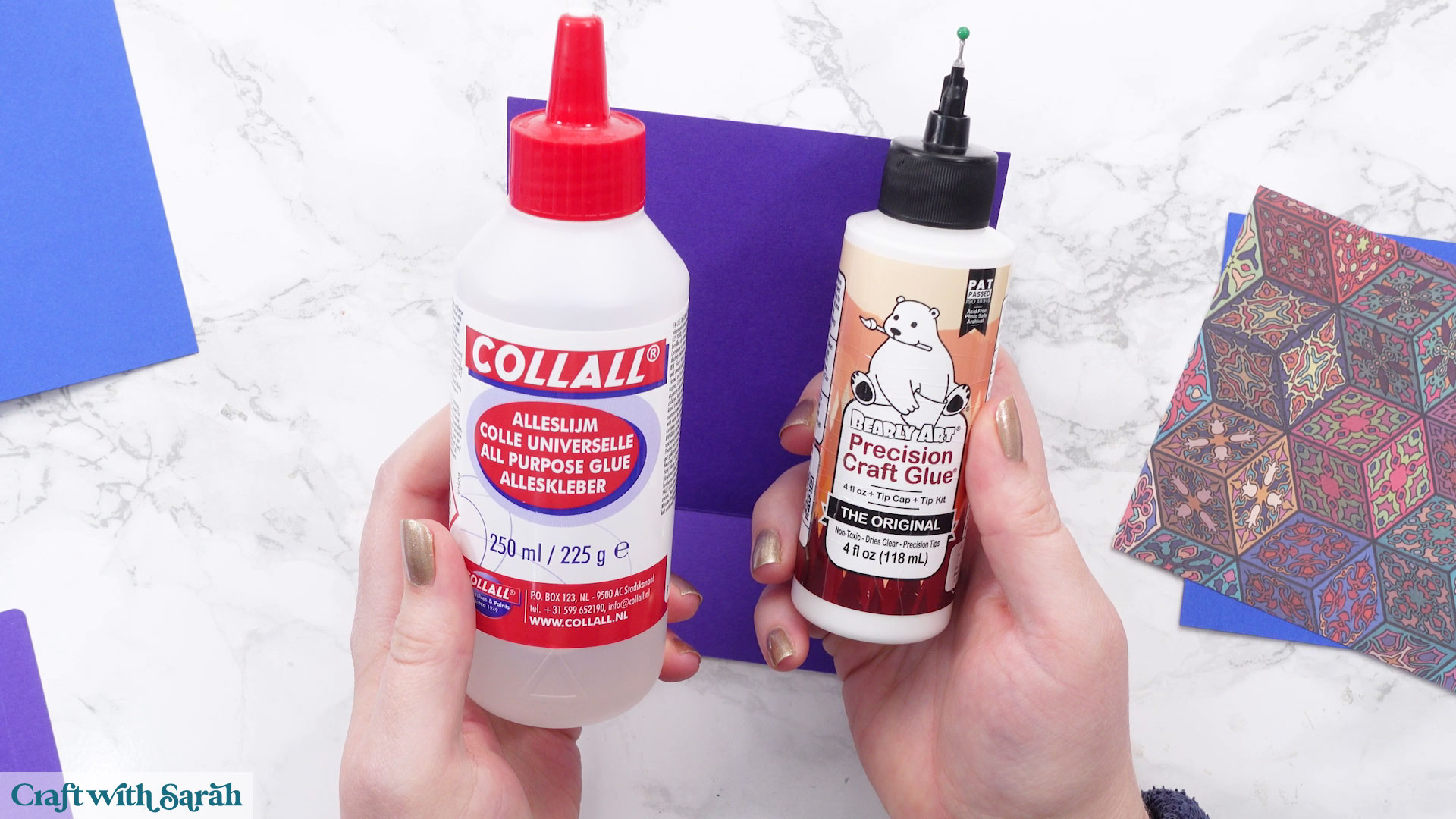
My favourite glues to use on papercraft projects are Bearly Art Glue and Collall All Purpose Glue.
These are great because they don’t “warp” or bend the cardstock like some glues do. You can use as much of it as you want and the card stays perfect – and it dries perfectly clear too!
Bearly Art Glue comes with a tiny nozzle to make it easy to apply glue to small areas of card. The Collall glue doesn’t come with this, so it’s easiest to decant it into needle tip applicator bottles so that you have more control.
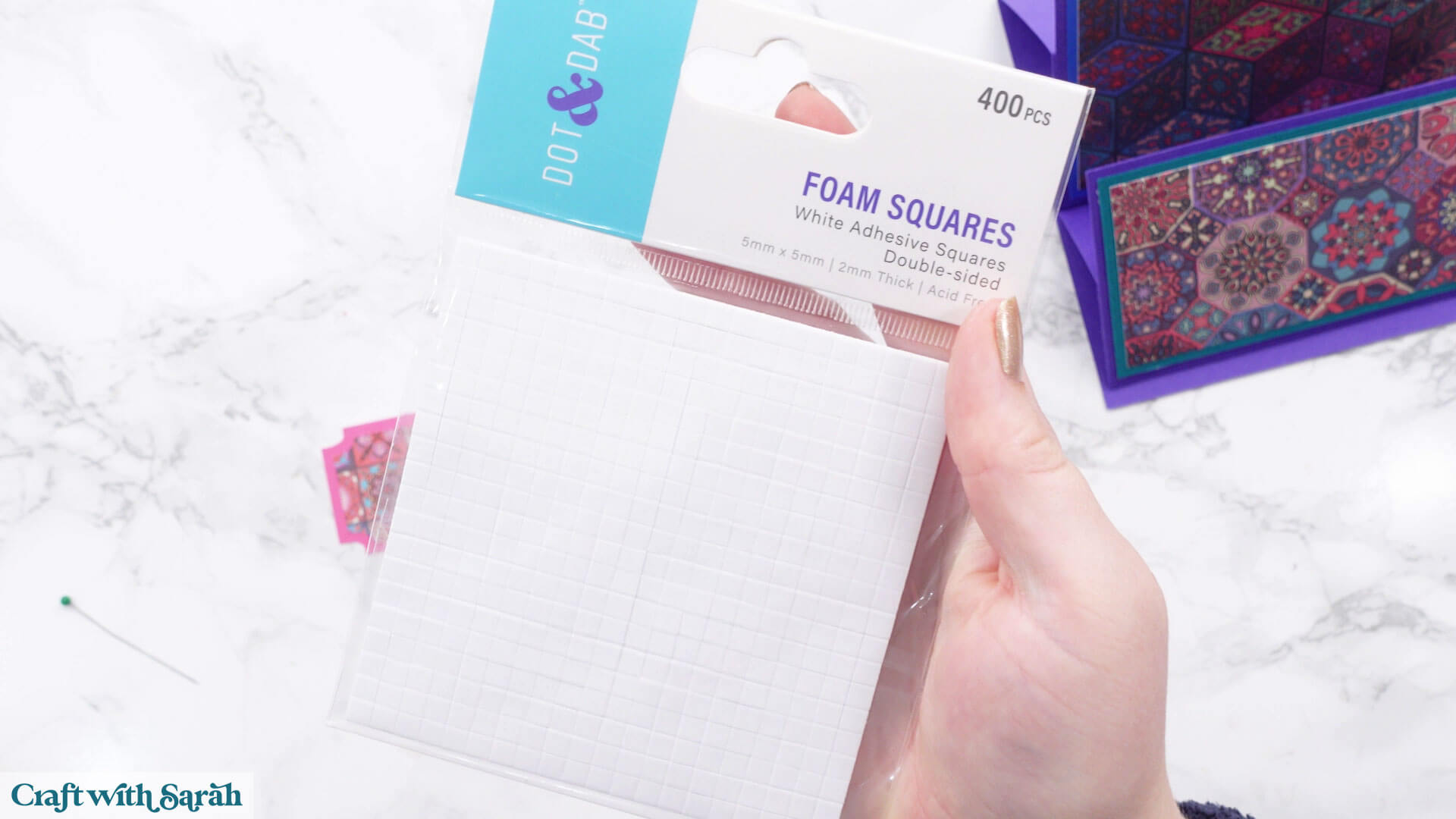
The foam squares I’m using are from Dot & Dab, but any will do.
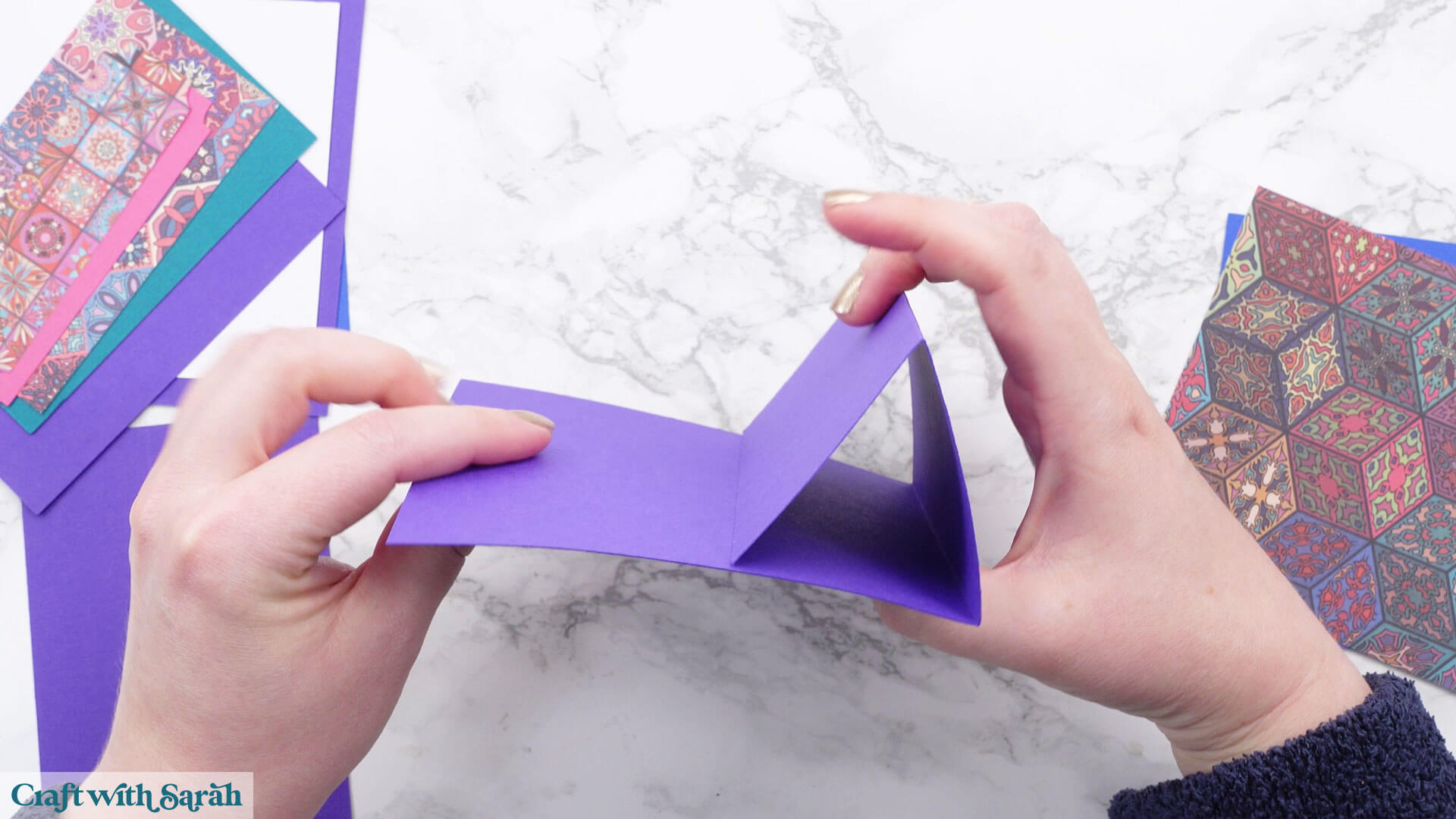
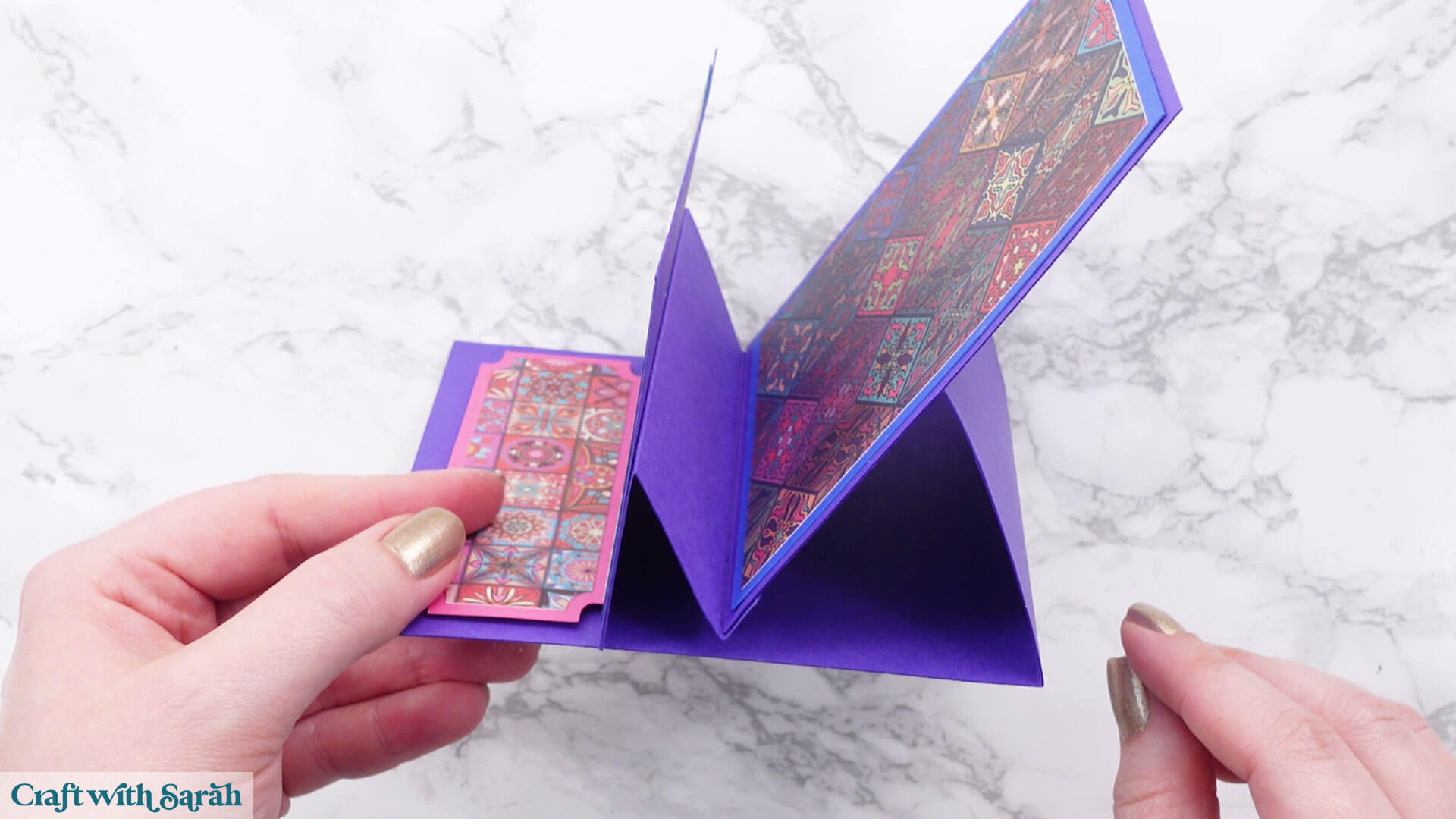
Fold the largest base card piece along the score lines to make a triangular tent shape.
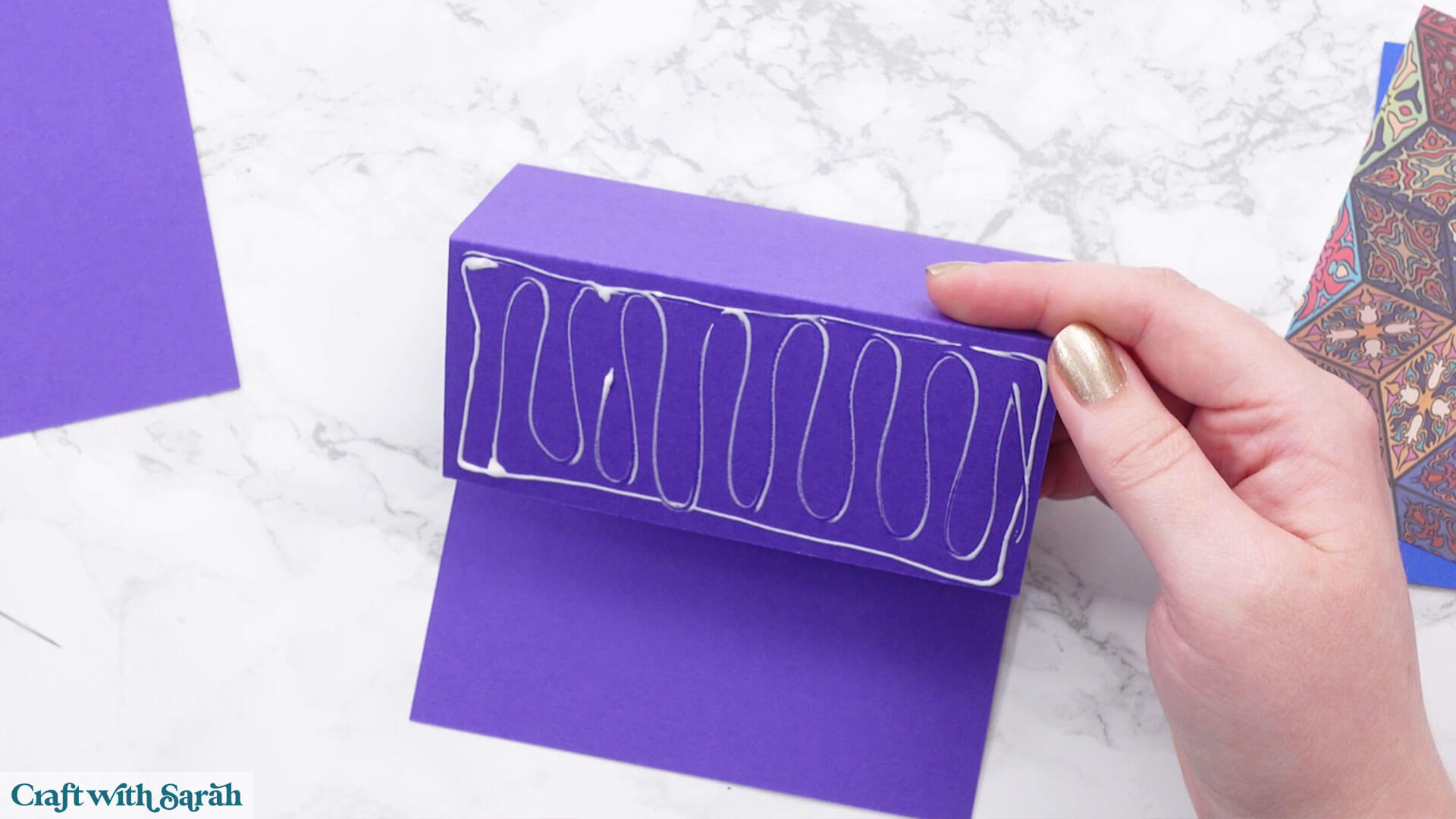
Add glue to the outside of the front section of the base card.
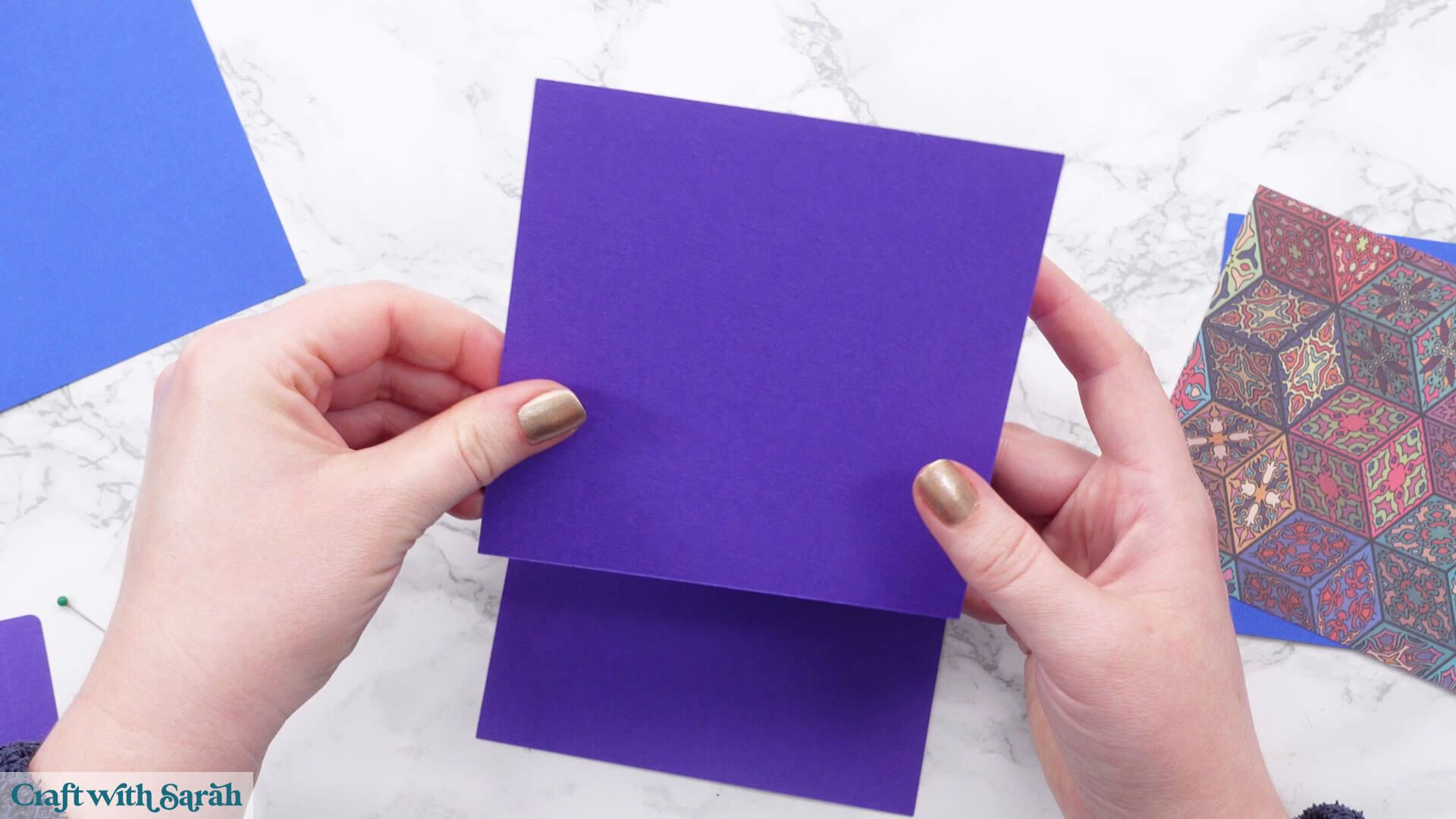
Glue the larger shape on top, lining up the bottom of the shape with the bottom of the base card front section.
Select the smaller structure piece.
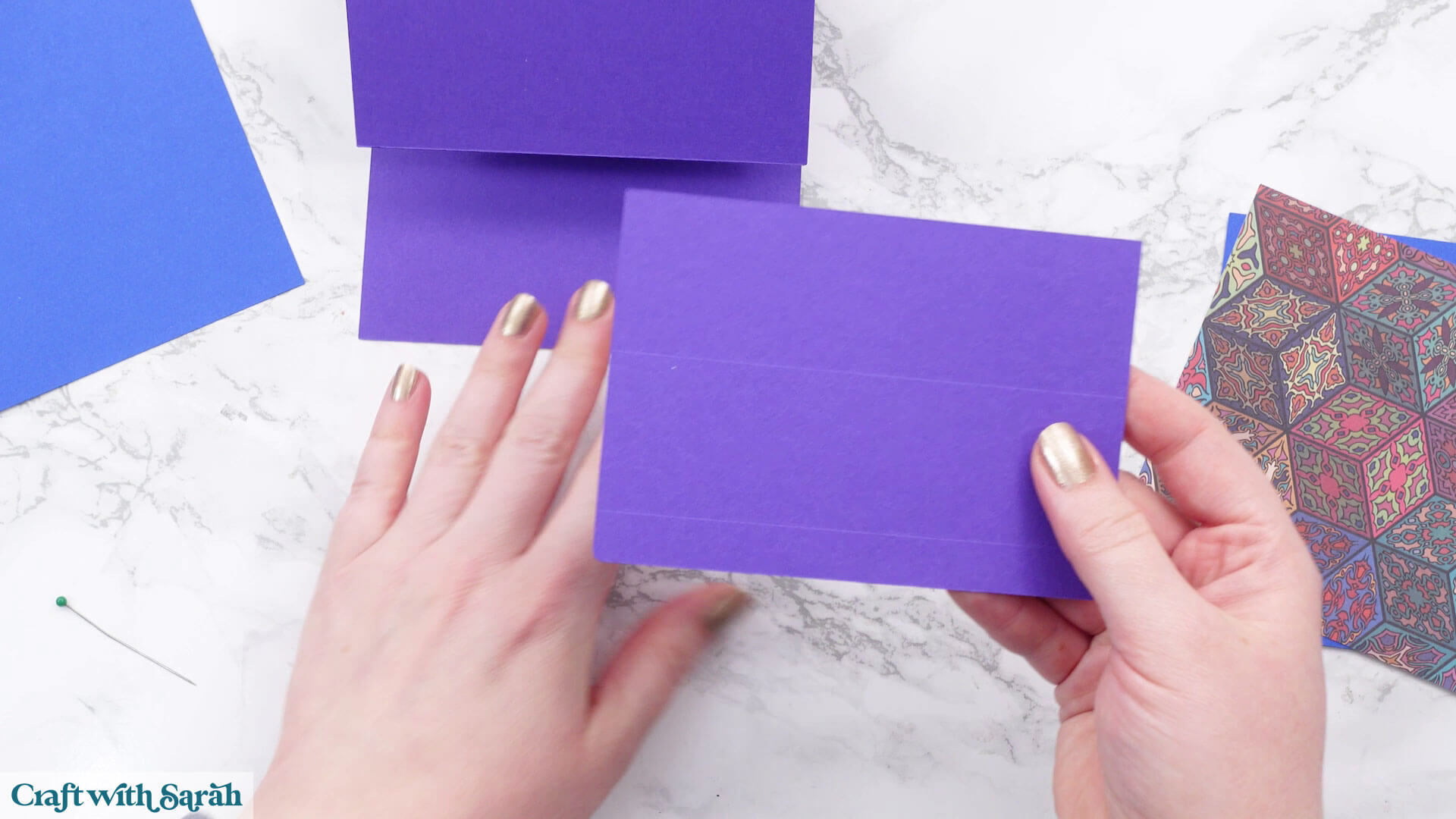
Valley fold the shorter tab and mountain fold the other score line.
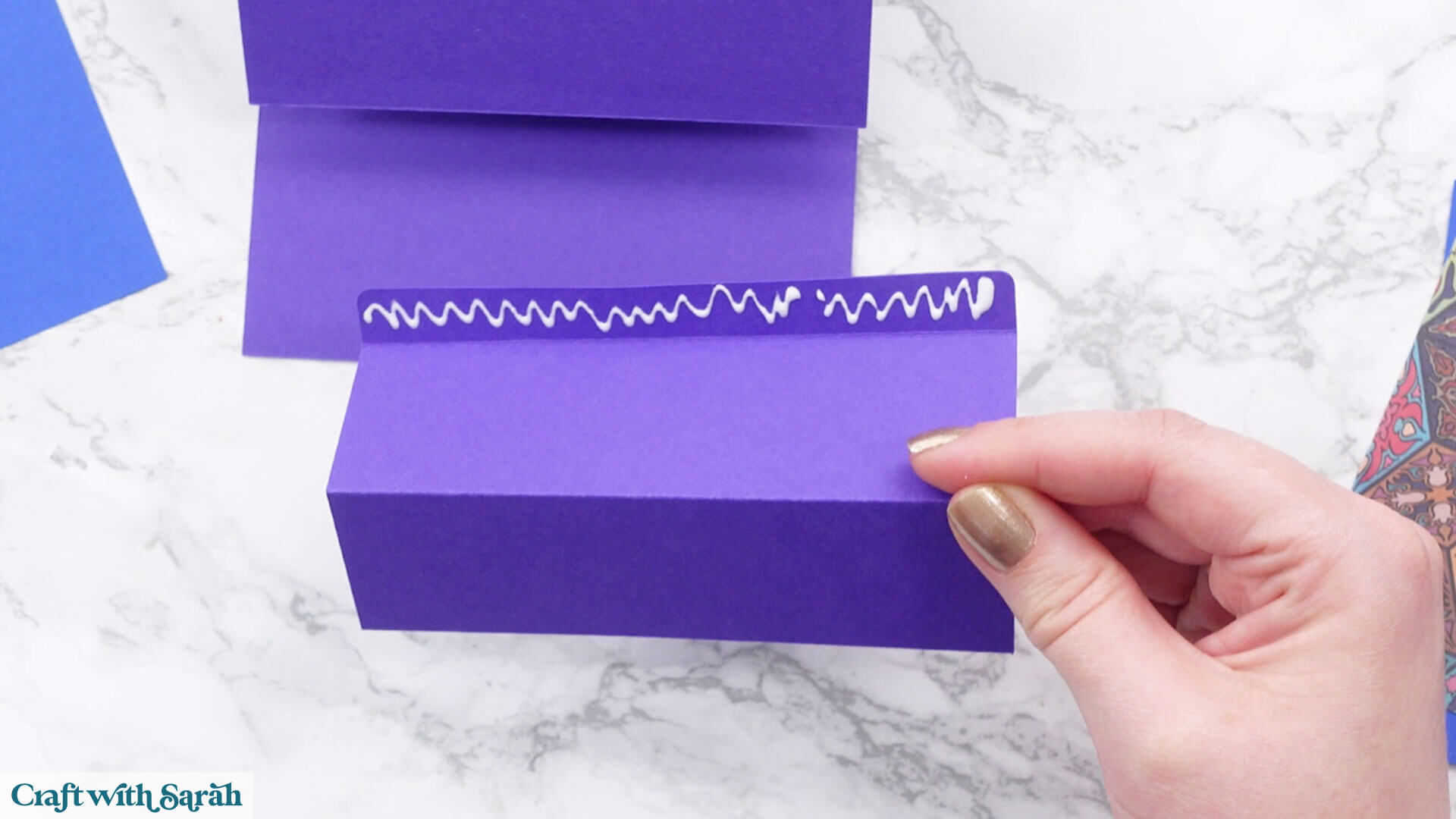
Add glue to the top of the small tab.
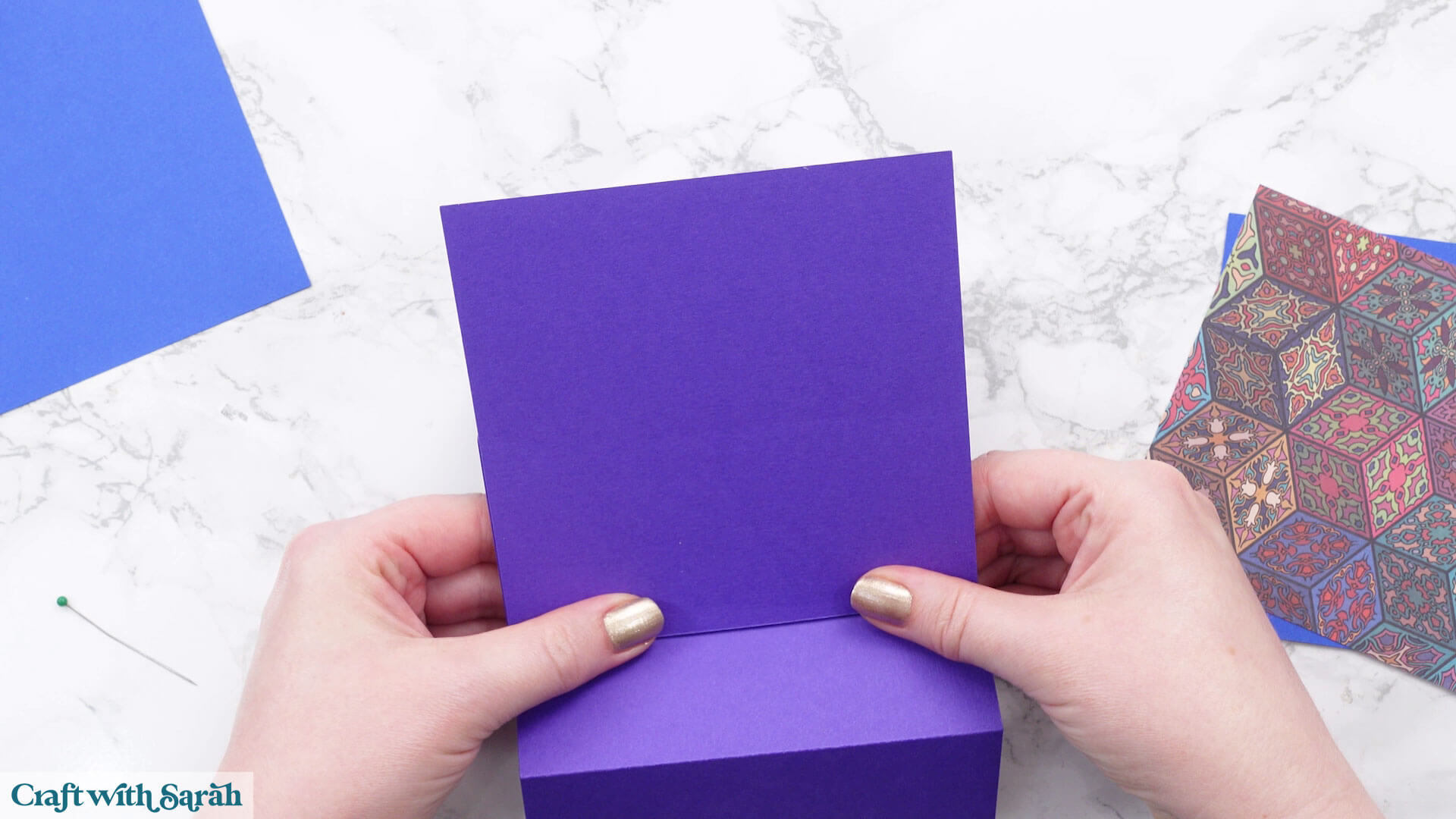
Stick to the inside/back of the main shape you previously attached.
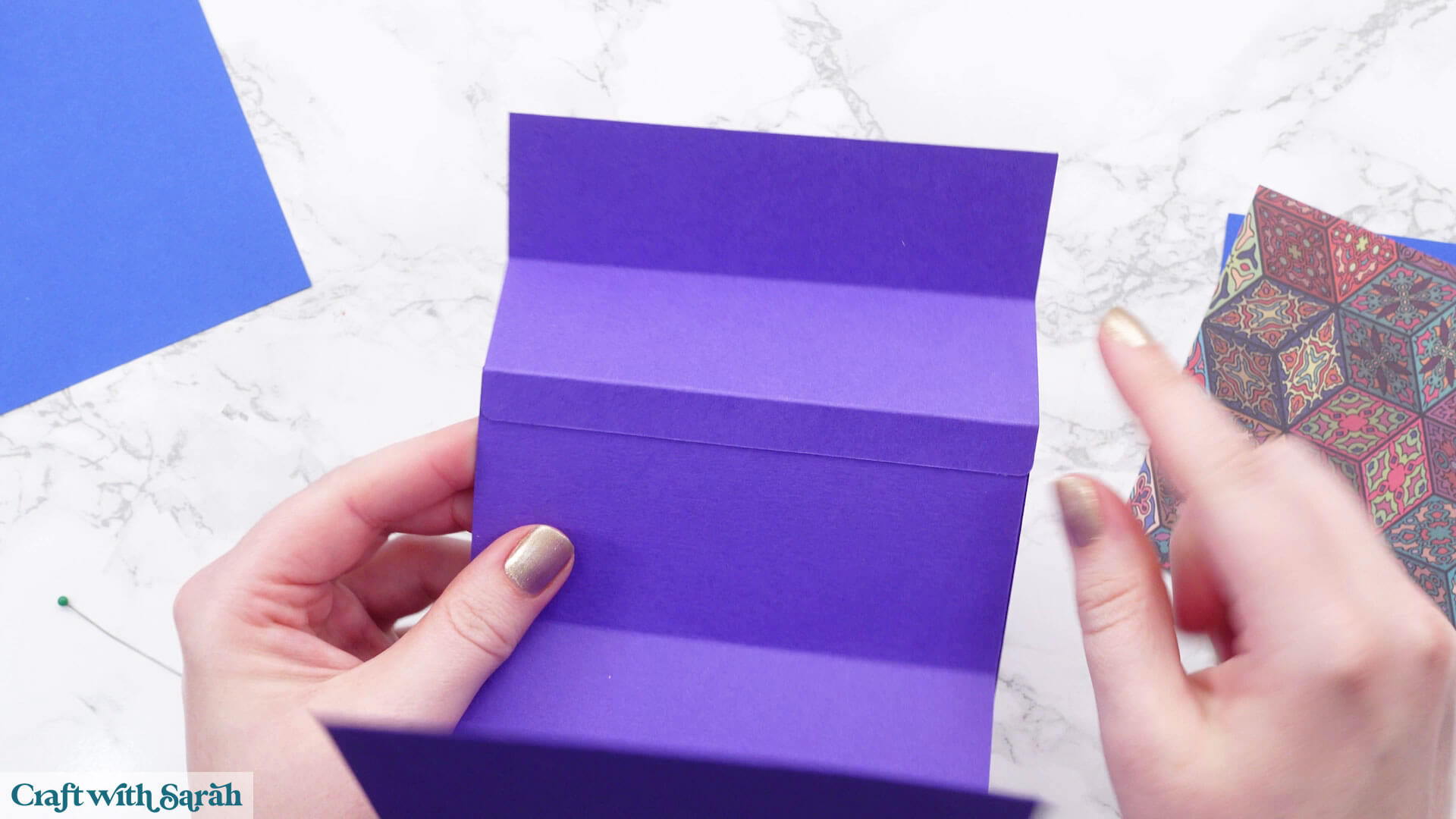
Here’s how it looks from the underside:
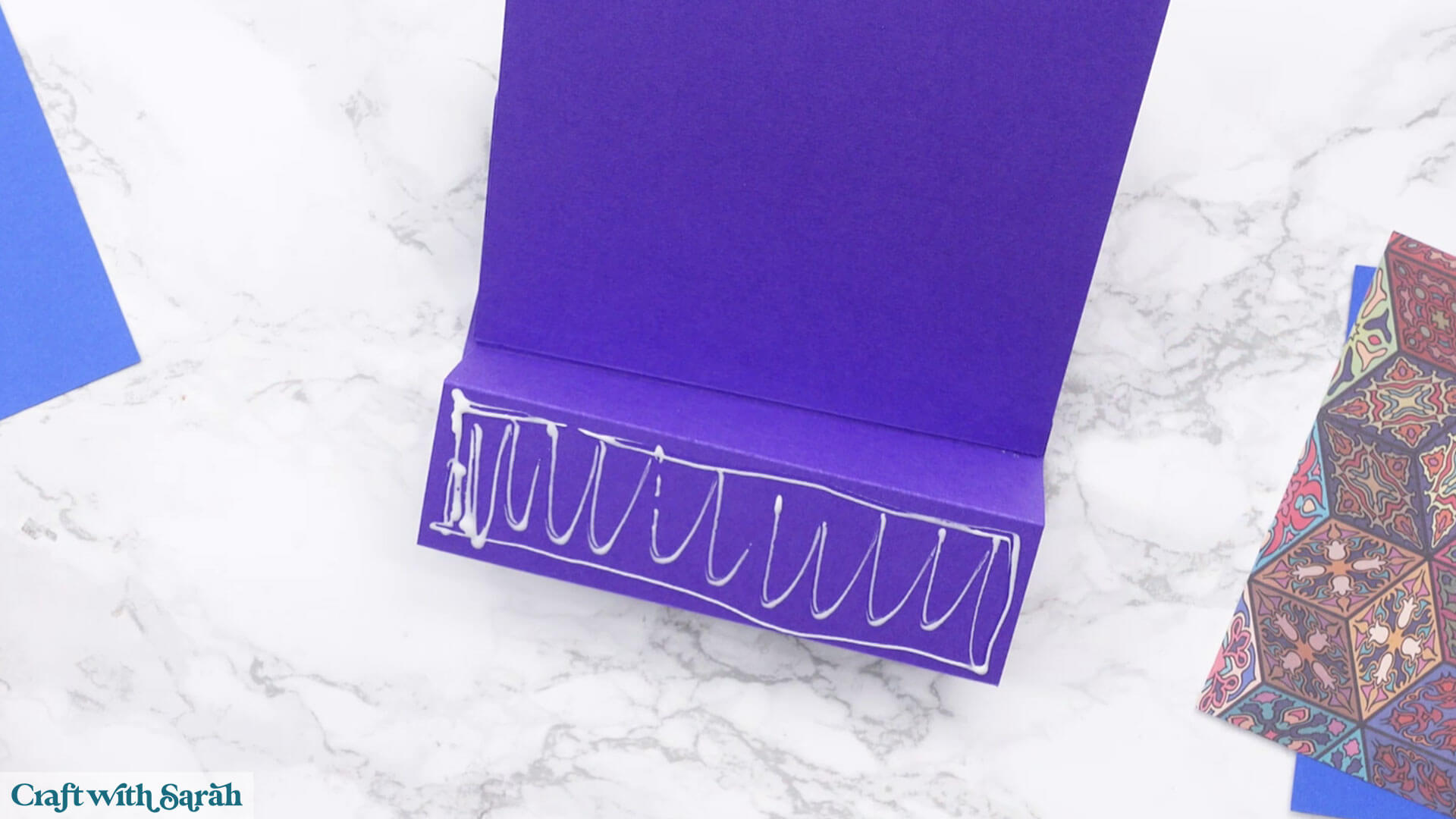
Fold this section like a tent too, then add glue to the front.
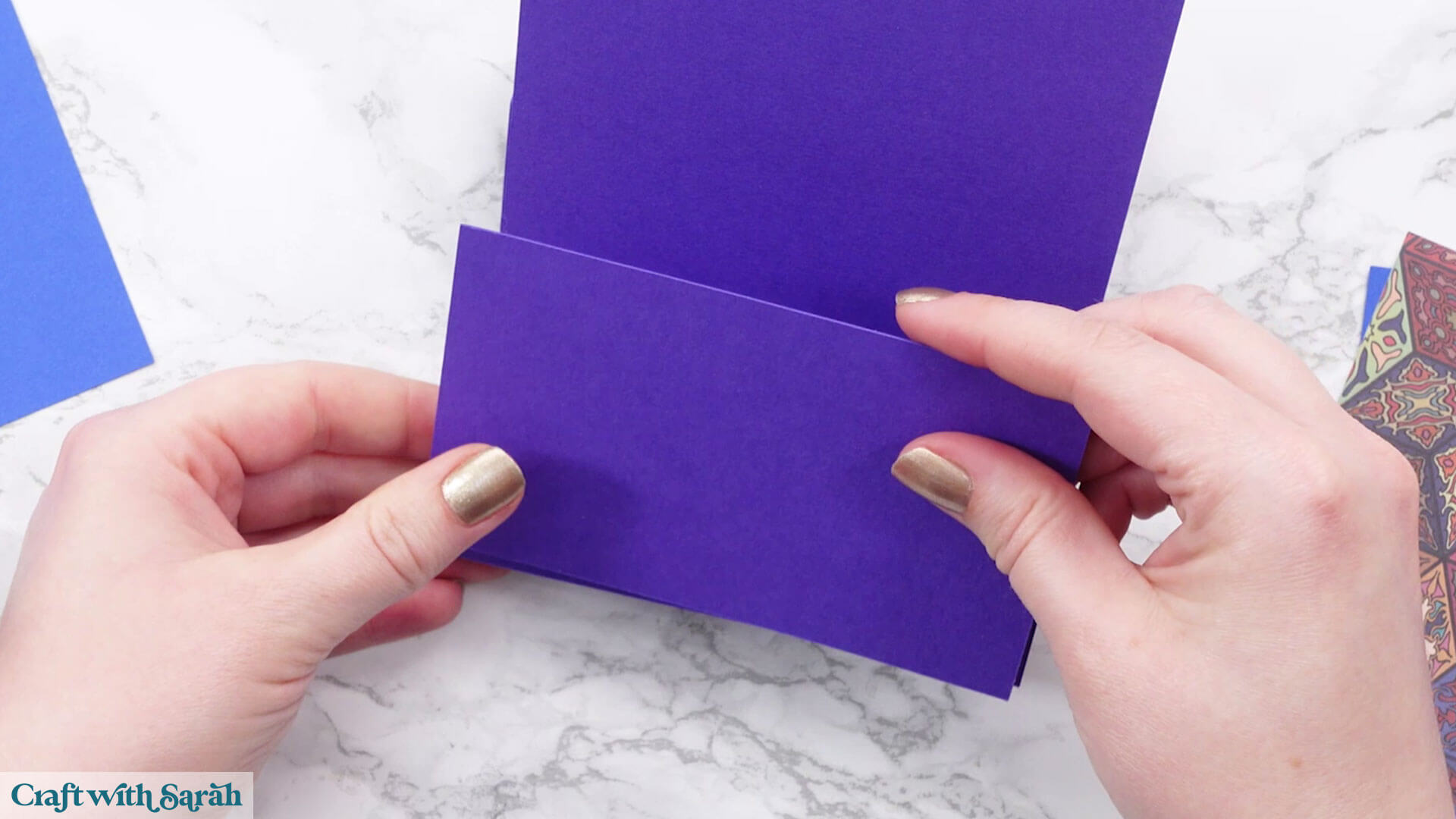
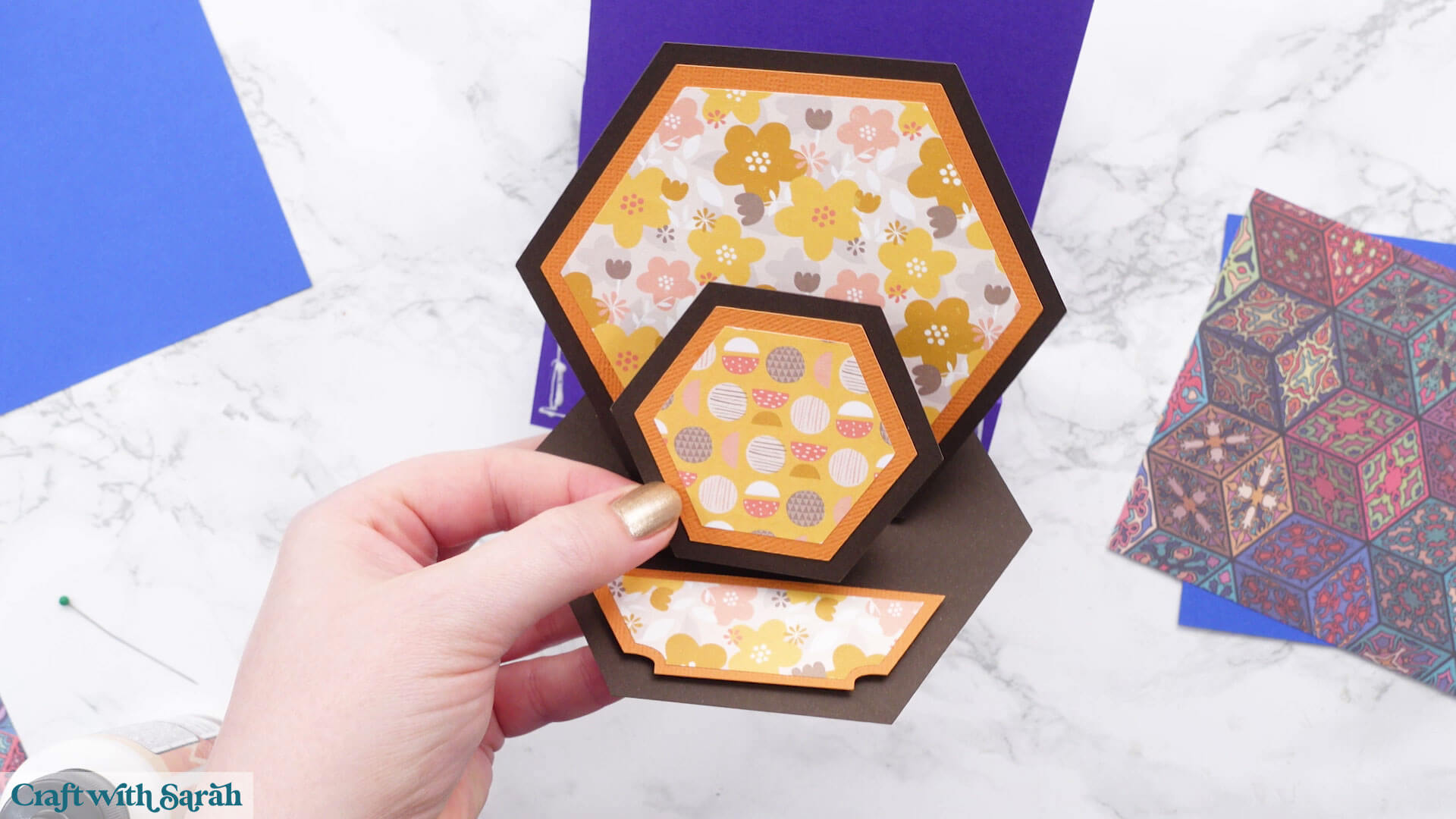
Attach the smaller shape on top.
Note that for the hexagon and circle templates, the smaller shape does not cover the full width of the card.
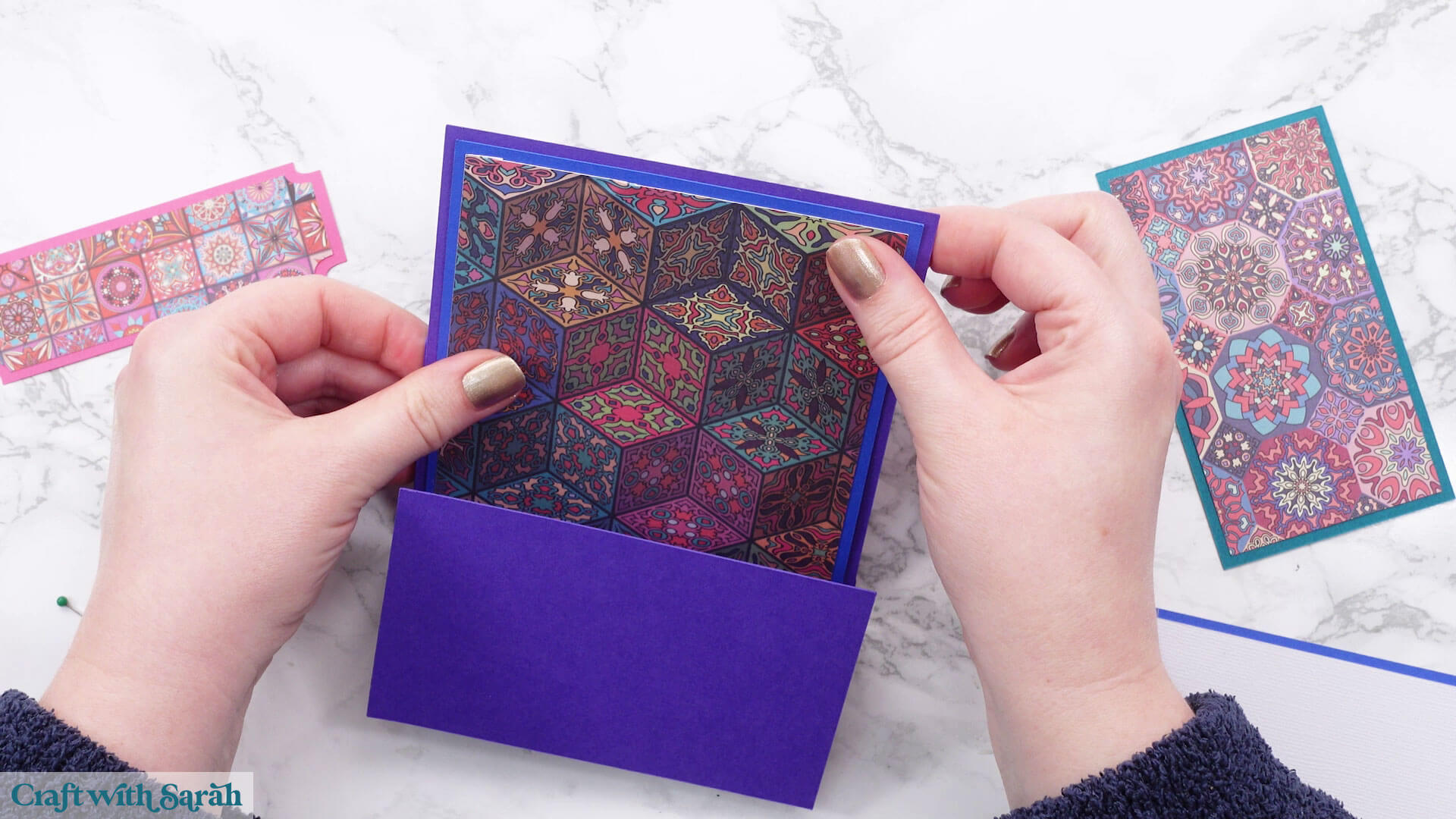
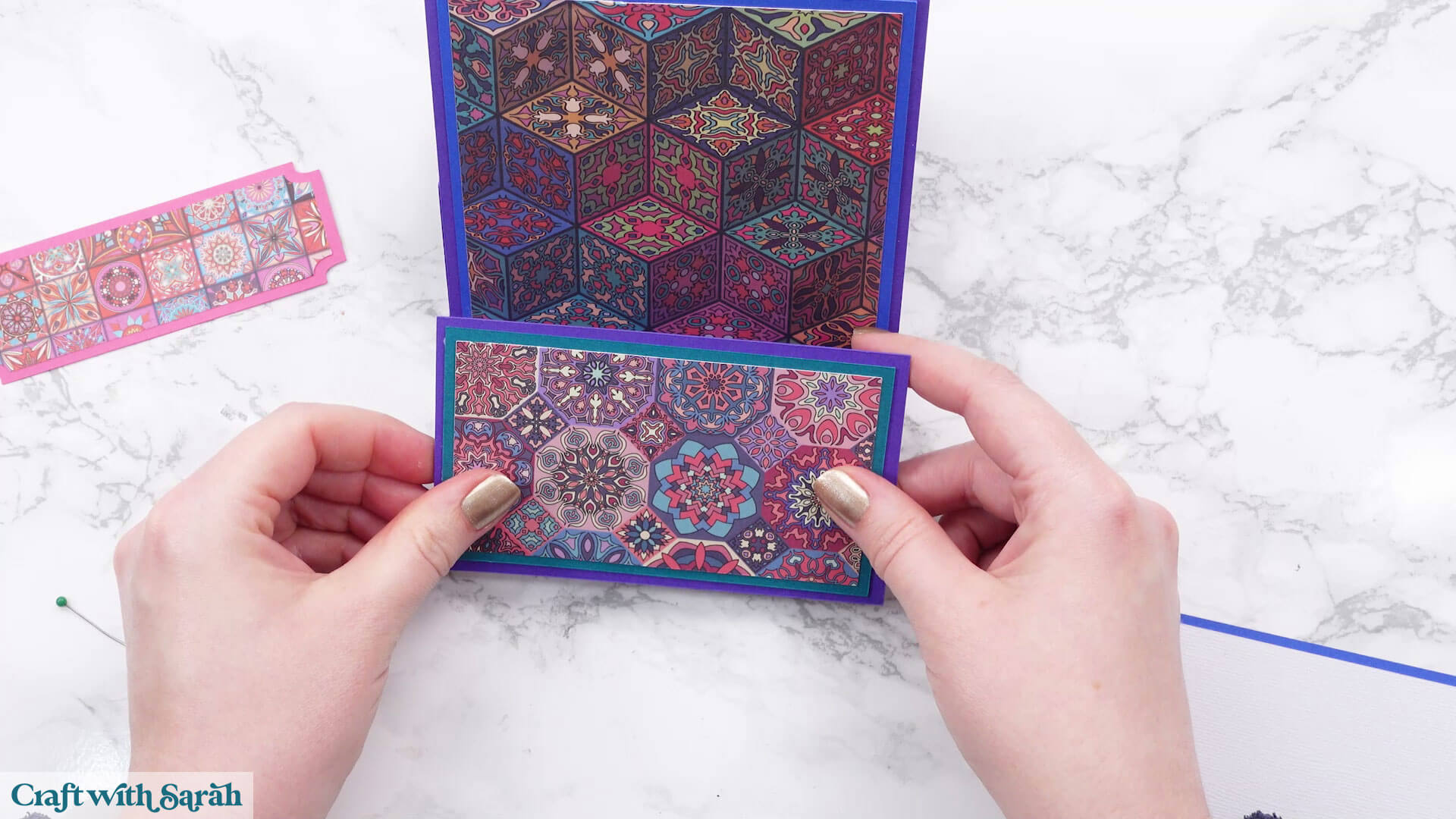
Add your decorated panels to both sides of the double easel card.
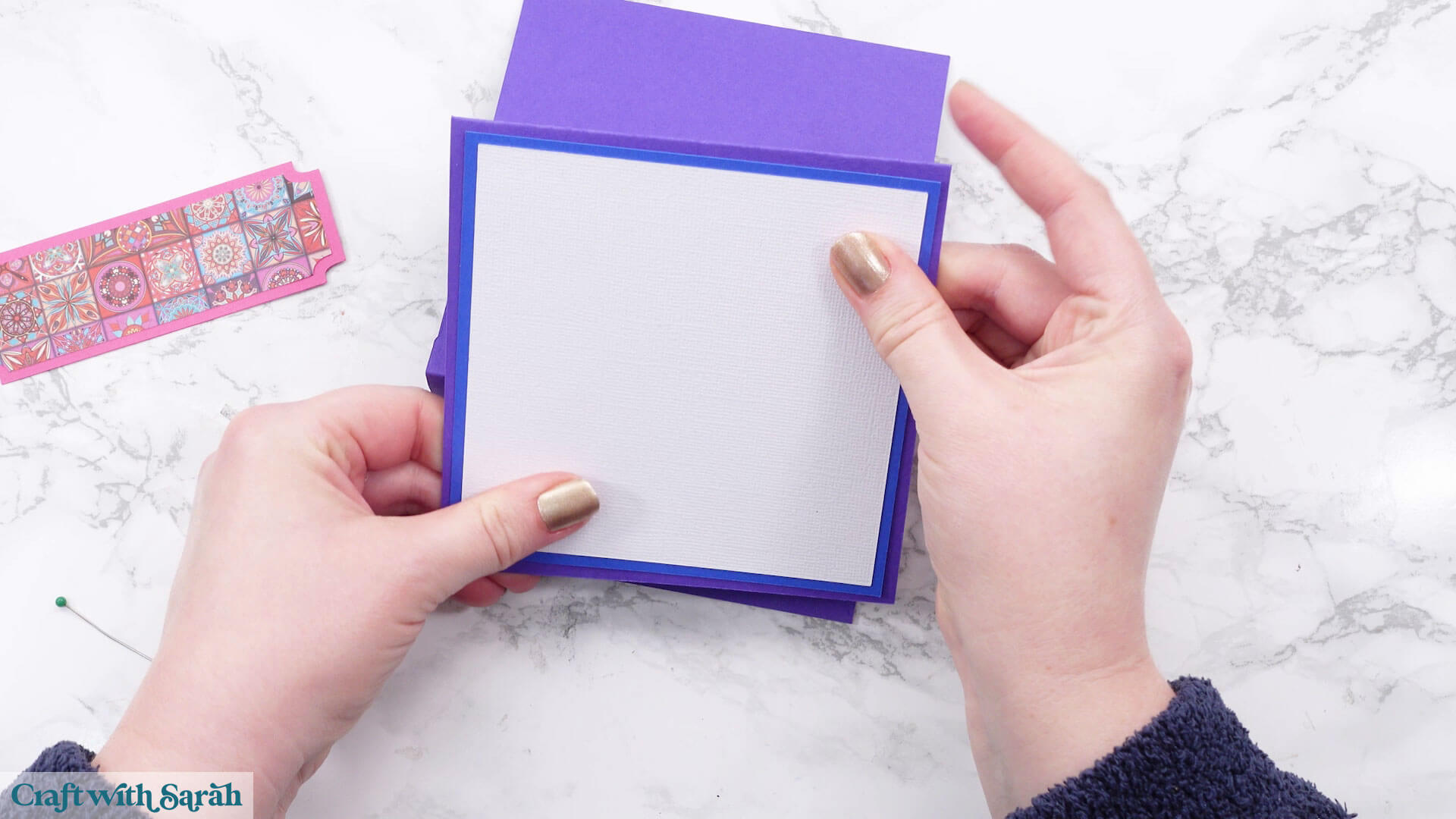
Glue the white message panel to its larger backer, then glue to the underside of the card.
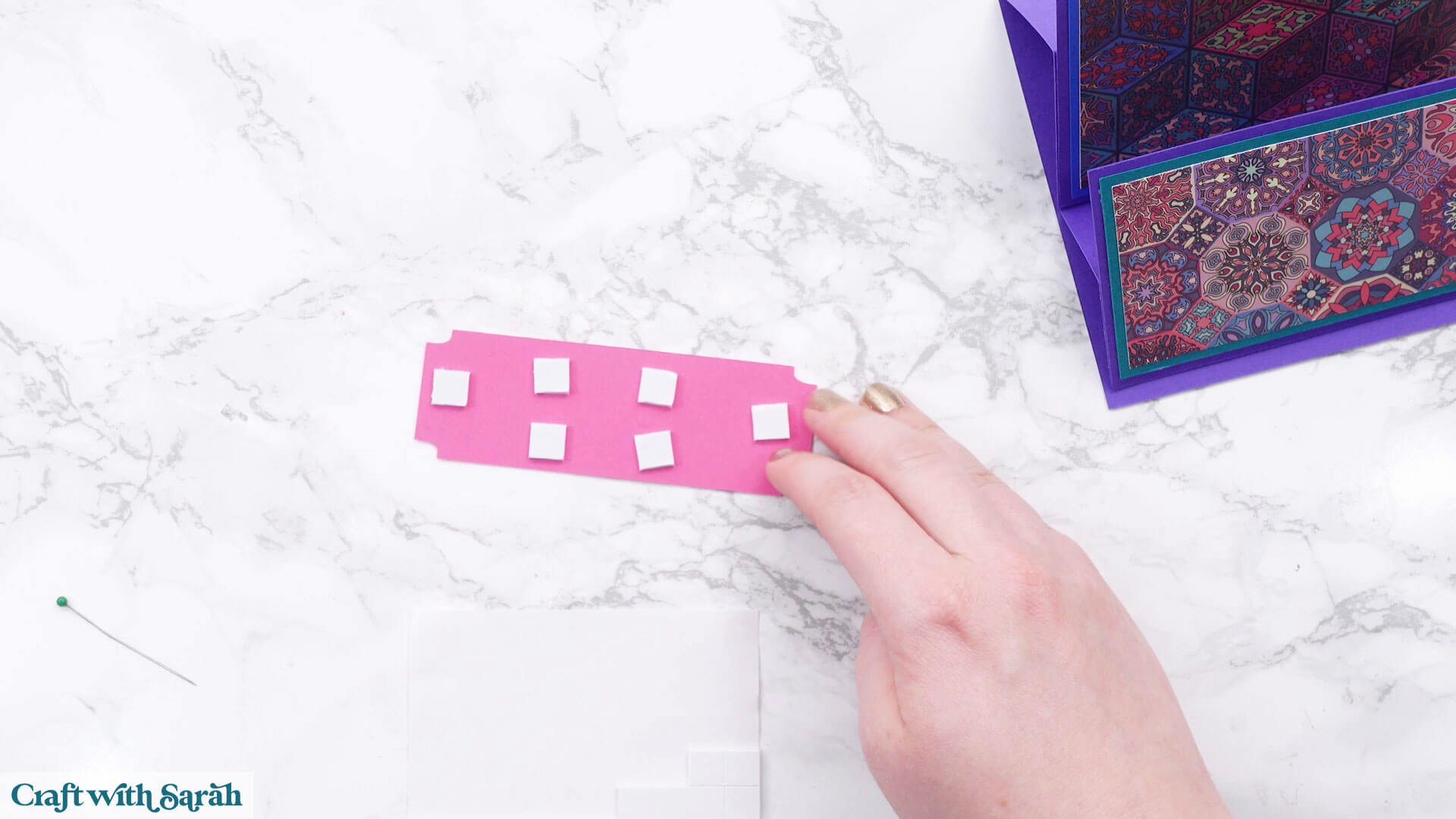
Glue the smaller “stand” shape onto the backer.
Put foam squares on the back.
It’s important to use foam squares to attach this piece to the card, not glue, as it needs the depth in order to hold the card upright.
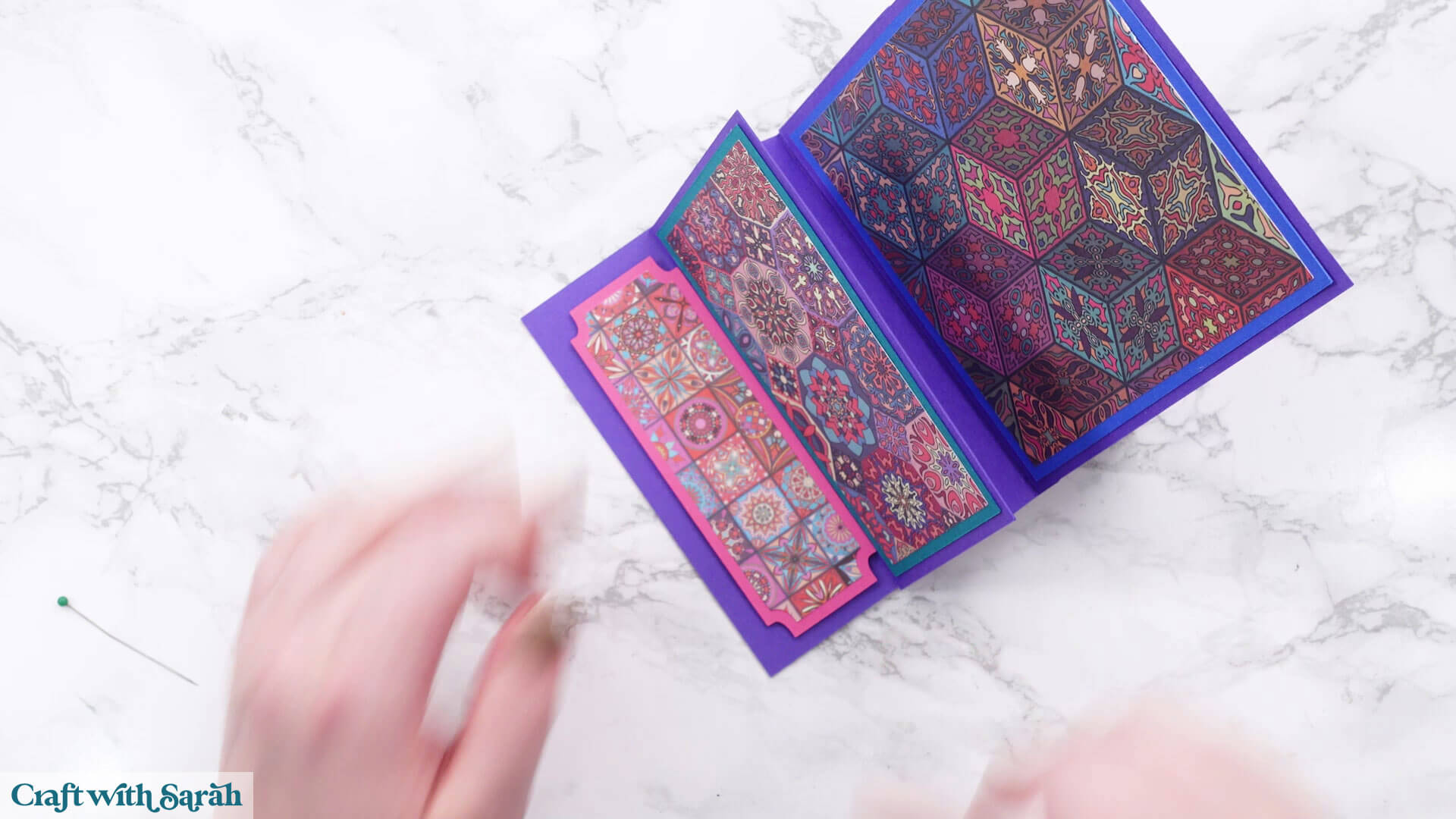
Attach to the card, near the front. Try to get it central horizontally.
This will hold the card in place.
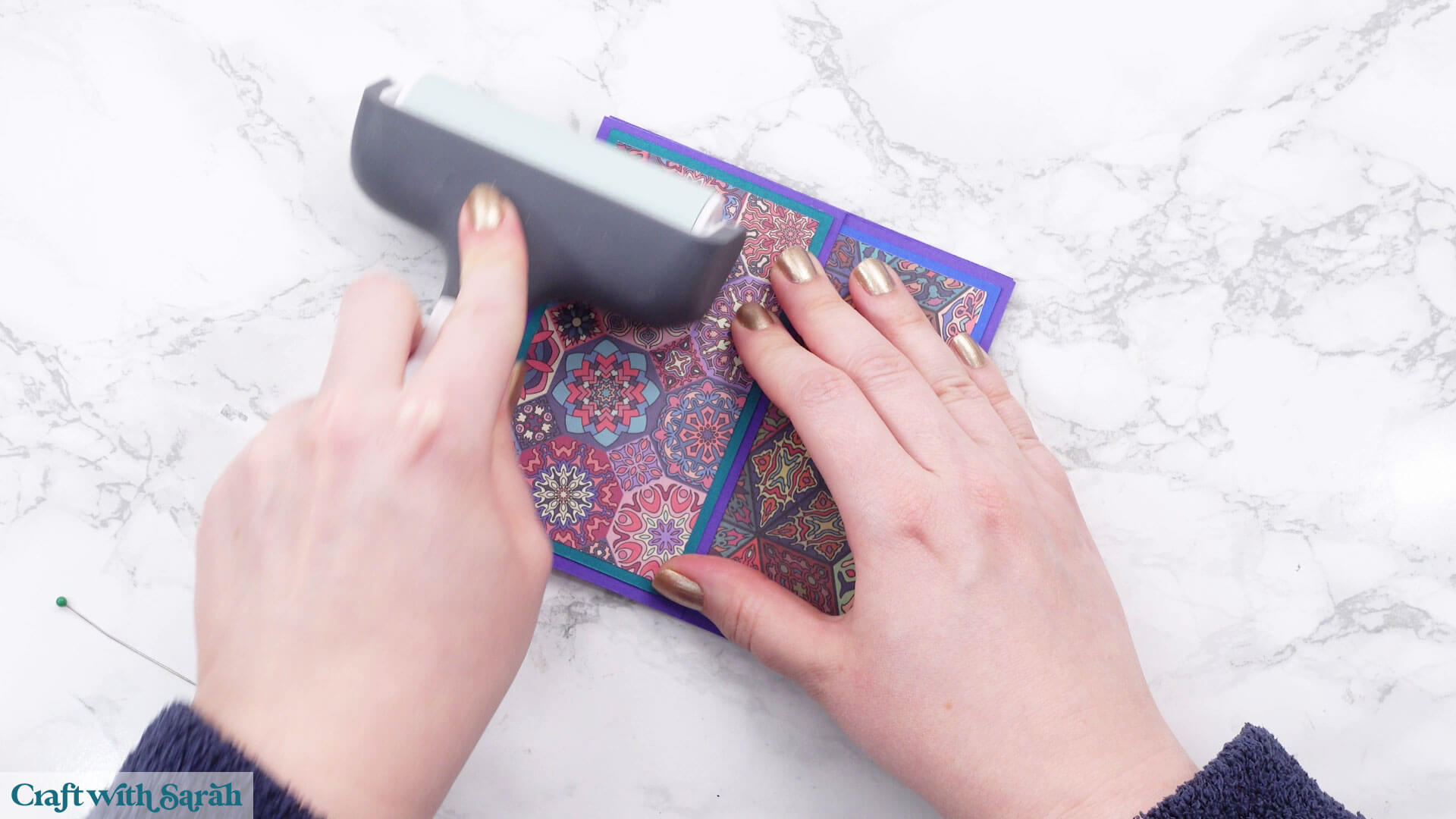
Fold the card flat and go over it firmly with a brayer or similar.
This helps to “train” the card into position so it stands better.
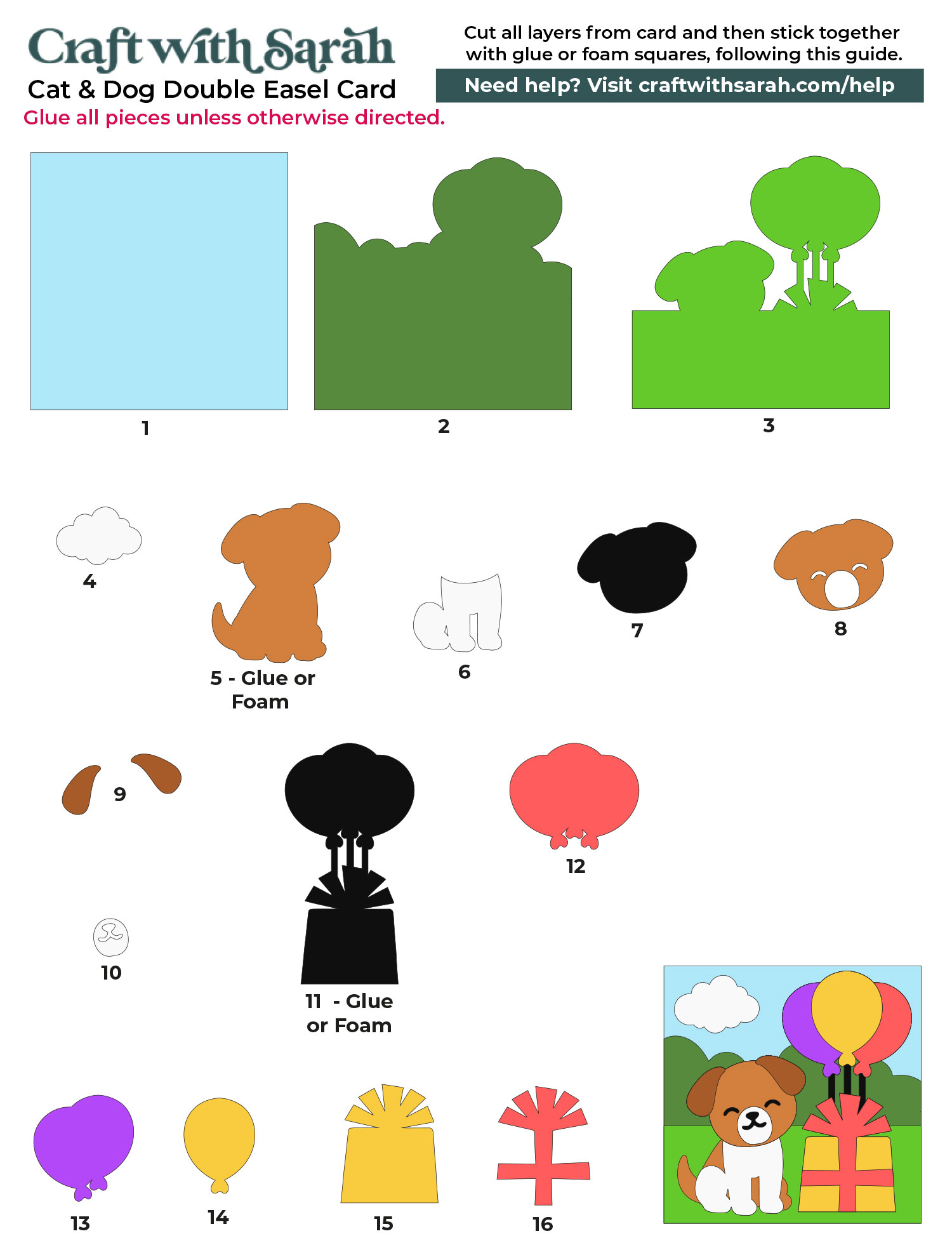
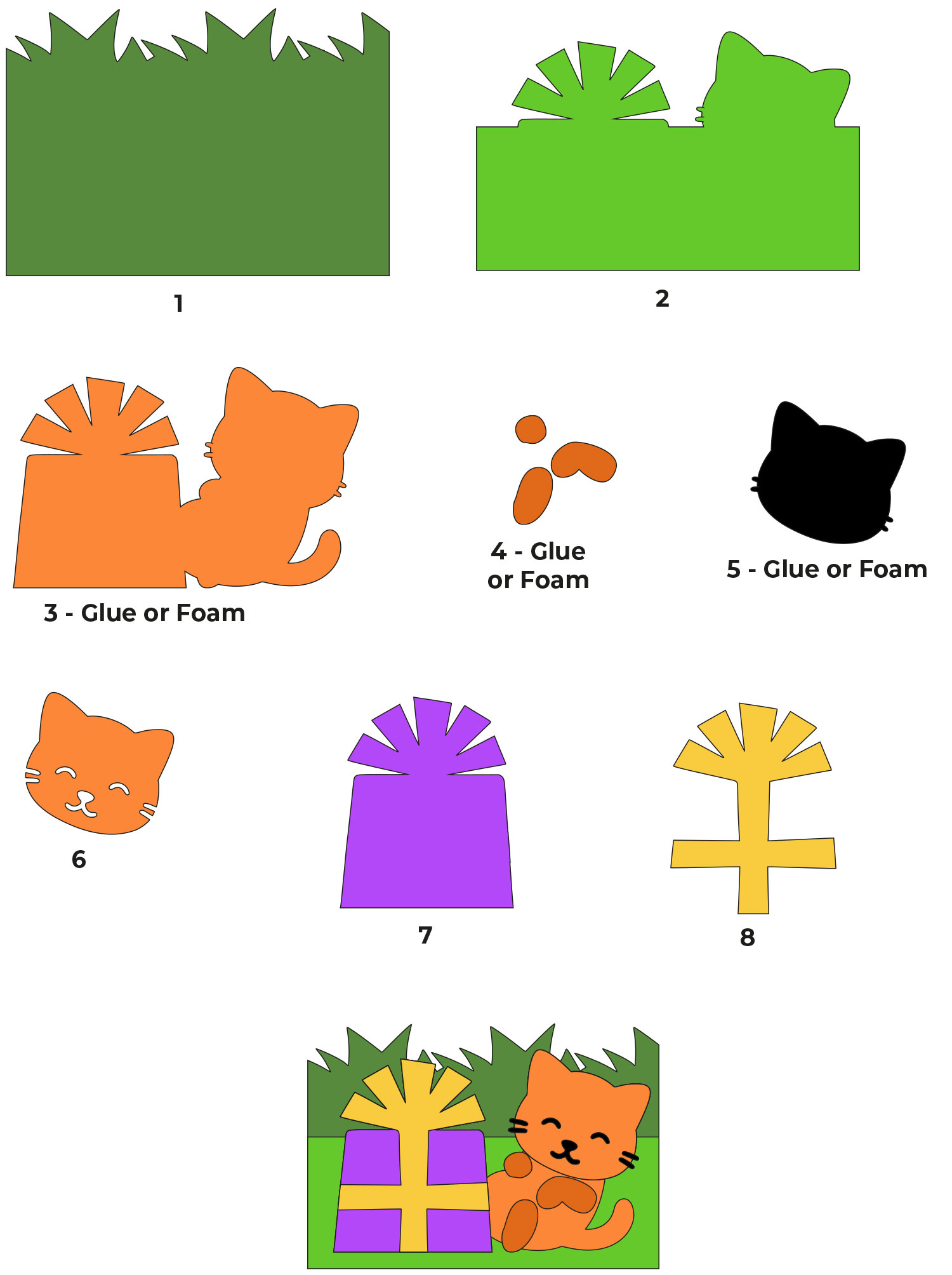
If you are making the dog/cat card, here is an assembly guide to show the order to put the pieces together in.
I used foam squares to add some dimension to some of the layers, but this made the card harder to stand.
If I was to make it again, I would probably glue all of the pieces instead.
Double easel cards tutorial
I hope you enjoy making these double easel cards.
As there are three different shaped templates, you have a huge amount of crafting possibilities with your designs.
I am looking forward to seeing all your creations!
Put your cards in a custom envelope or 3D presentation box to make them even more special.
Happy crafting,
Sarah x